
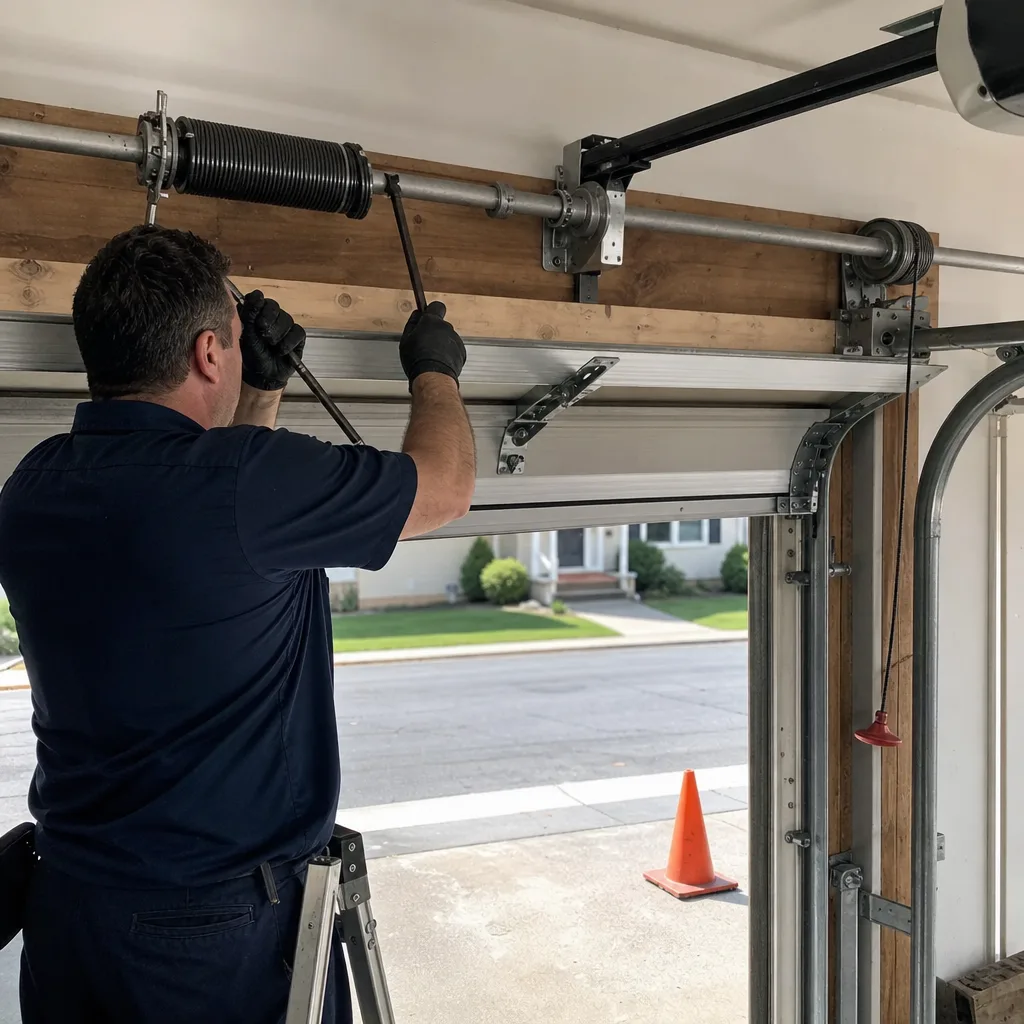
Last updated November 21, 2026
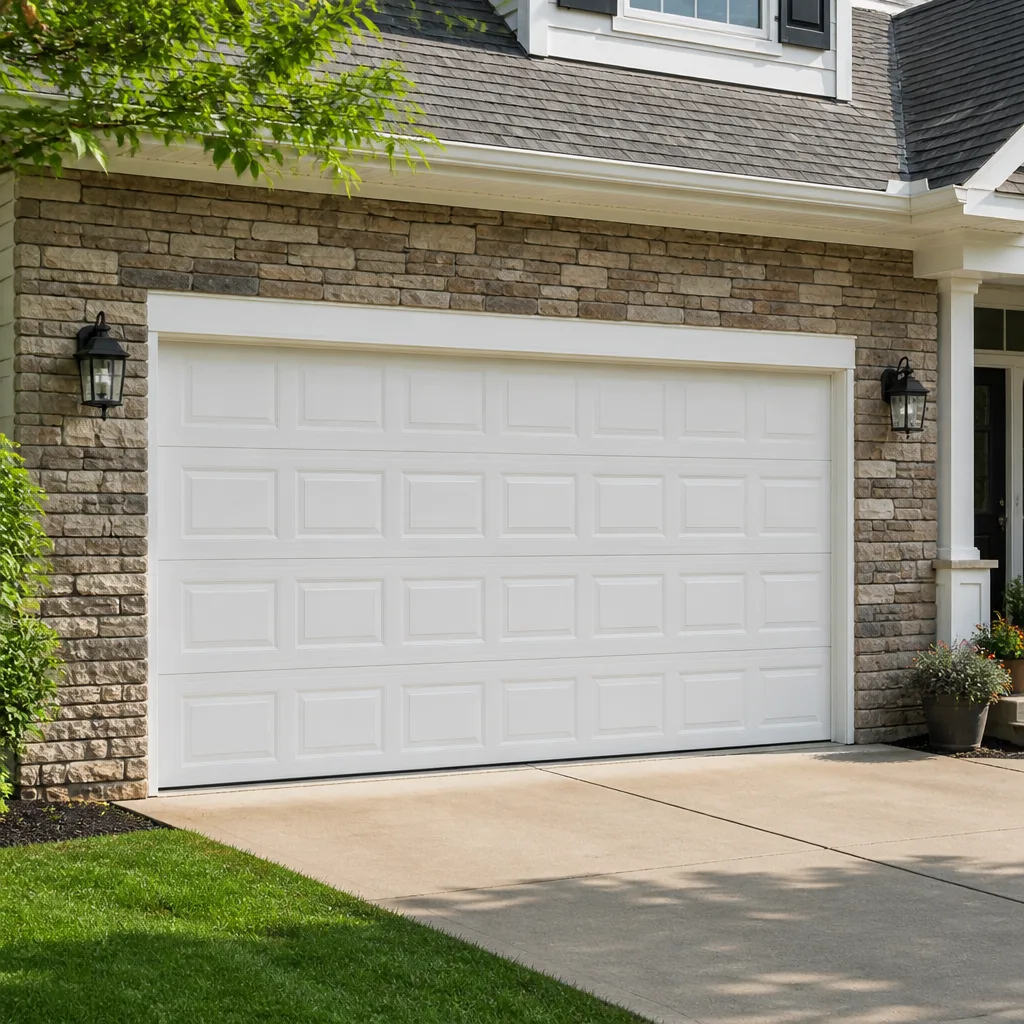 Raised-panel steel
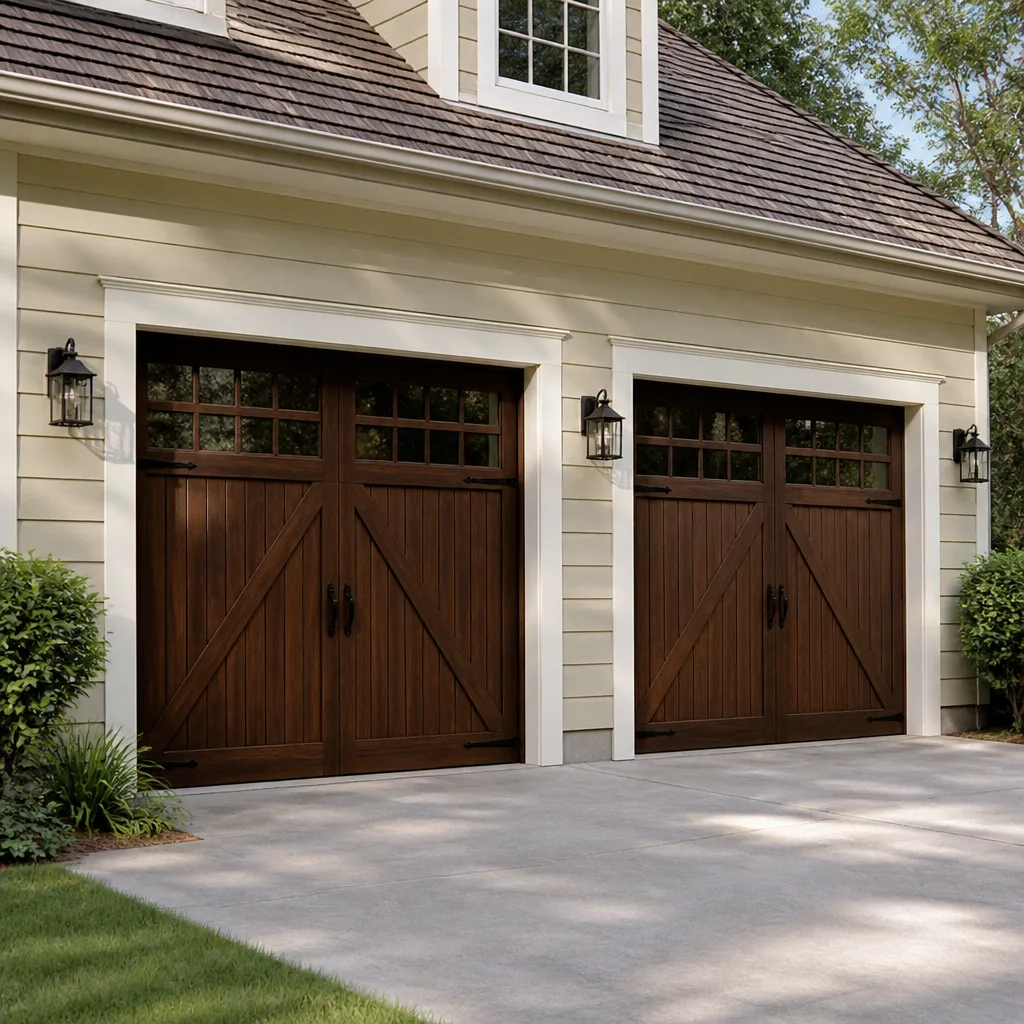 Carriage house
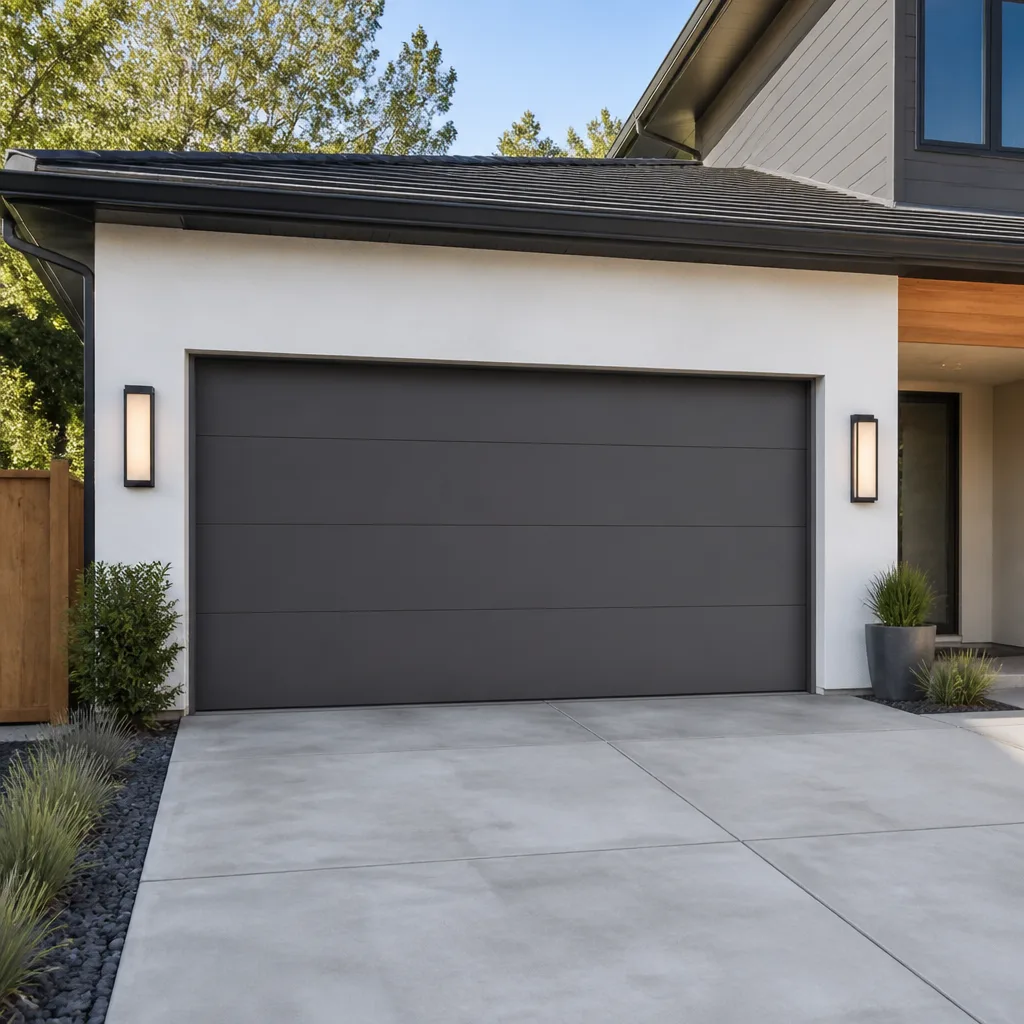 Modern flush
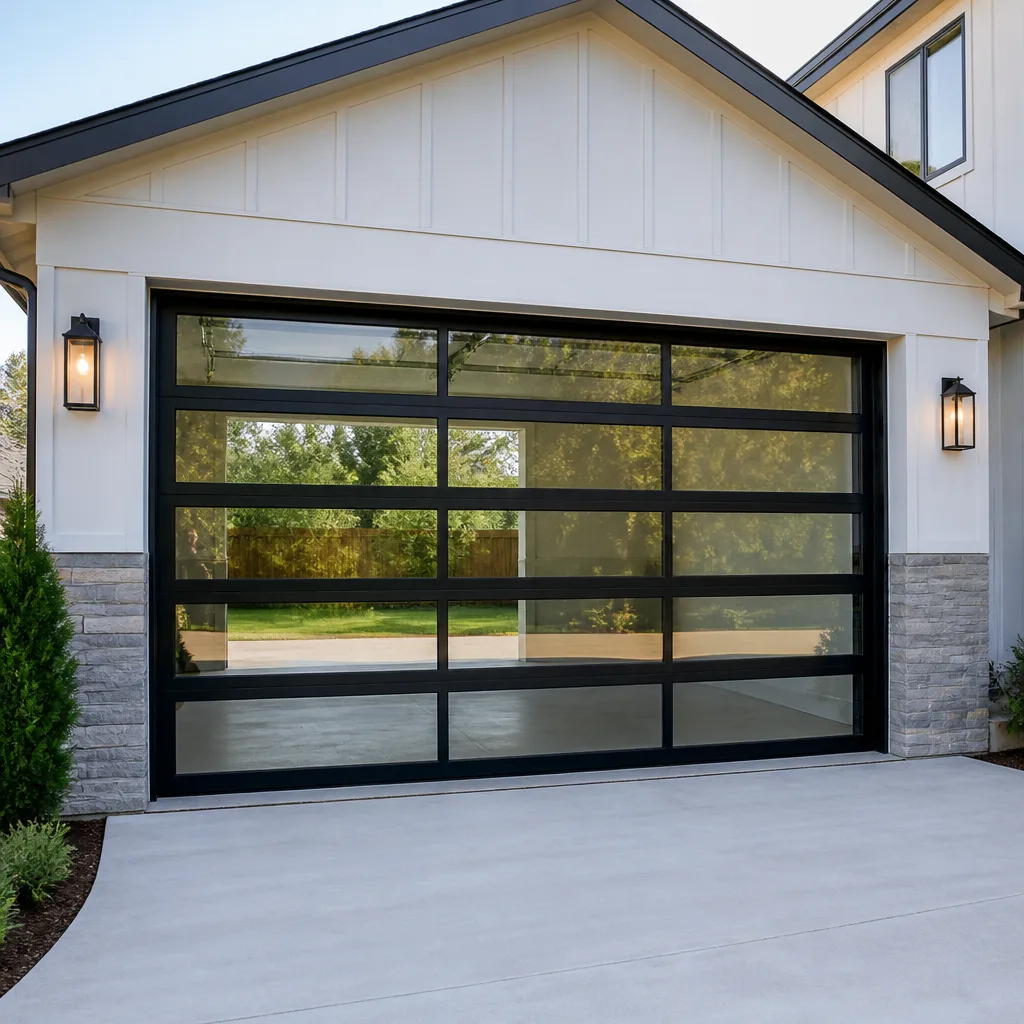 Full-view glass
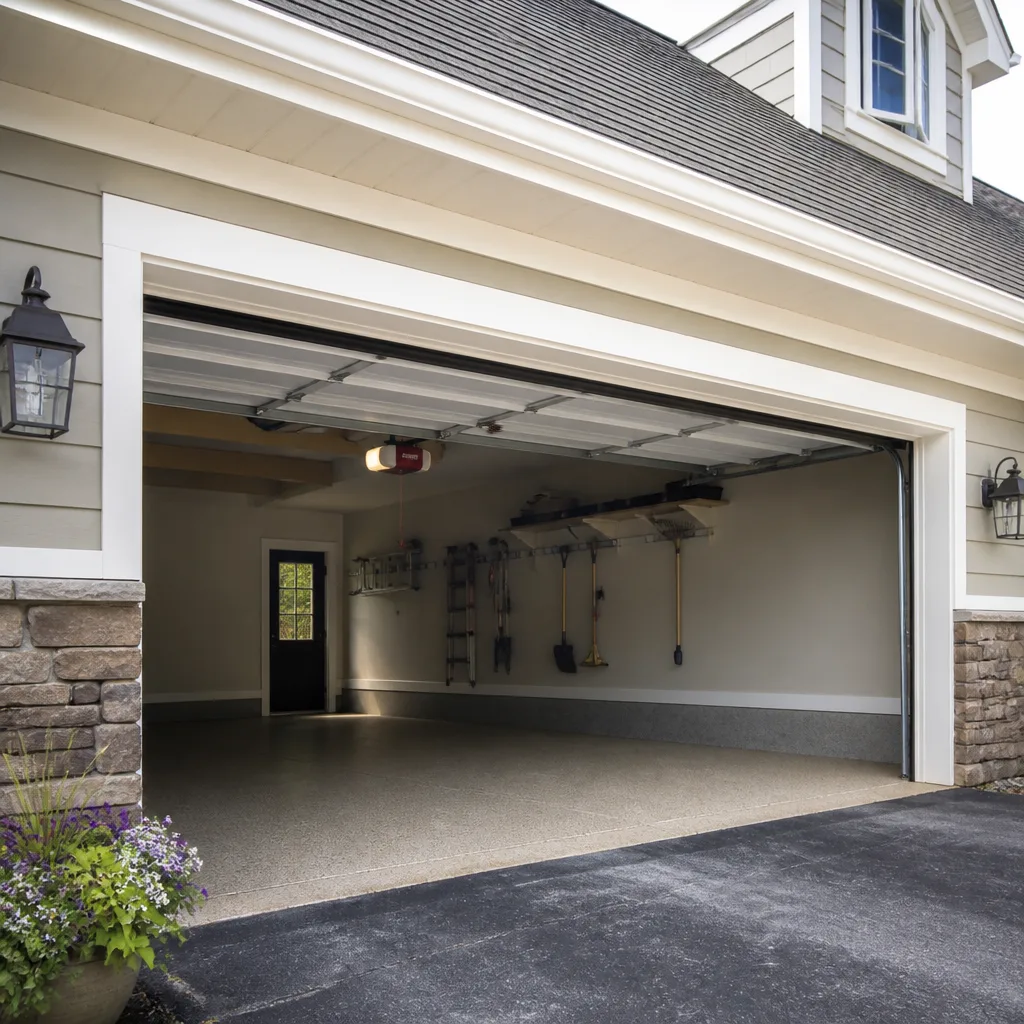 LiftMaster openers
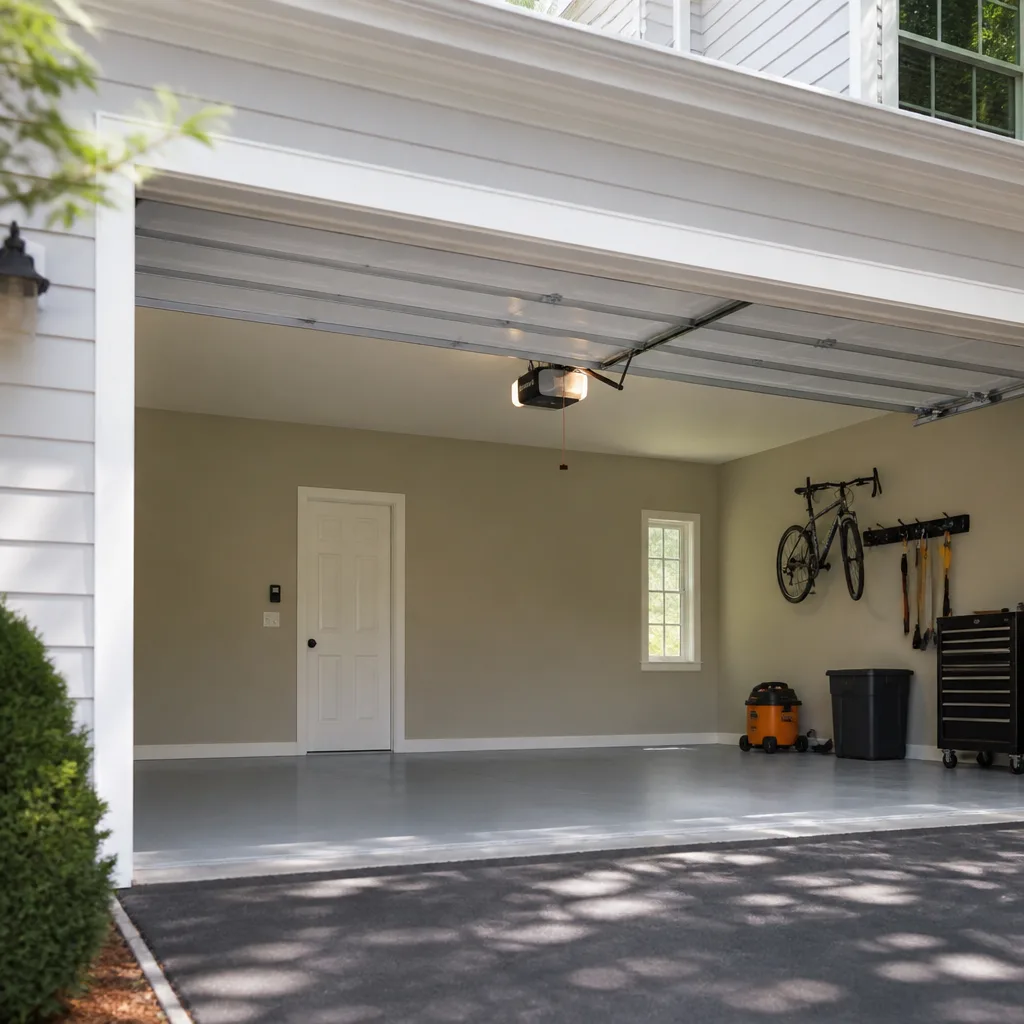 Chamberlain openers
Full 25-point door and opener safety check with every visit - springs, cables, rollers, tracks, and your LiftMaster or Chamberlain opener included
You get a price before we start. It does not change when the pro arrives.
Get your free estimateHow to Hire a Garage Door Contractor in Richmond: A Step-by-Step Guide
Here’s the part most homeowners never hear: in Virginia, a contractor doesn’t need a specialty garage door license to work on your door. A general contractor’s license covers the business, and plenty of handymen operate under the radar entirely. That means the person quoting your spring replacement may have done exactly three before yours. Hiring well in Richmond isn’t about chasing the lowest number or the biggest logo on a truck. It’s about asking five specific questions and reading one warranty document closely. This guide walks you through both, plus the local red flags that come up again and again, so you can tell a garage door specialist from someone squeezing your door in between HVAC calls.
Quick Answer
To hire a garage door contractor in Richmond, verify the business through the Virginia DPOR database, ask five diagnostic questions (parts sourcing, spring experience, brand familiarity, written estimate, warranty terms), and get a written estimate with the price fixed before work starts. A legitimate contractor will answer all five without hesitation and hand you a written warranty covering both parts and labor. Anyone who won’t put the price in writing or gets vague about warranty terms is worth walking away from, no matter how good the phone manner.
Styles & brands we work with
- Raised-panel steel
- Carriage house
- Modern flush
- Full-view glass
- LiftMaster openers
- Chamberlain openers
Table of Contents
- What Virginia Licensing Actually Requires (And Doesn’t)
- How to Verify a Contractor Through the DPOR Database
- The Five Diagnostic Questions to Ask Before You Accept a Quote
- Richmond-Specific Red Flags to Watch For
- Multi-Brand Specialists vs. Single-Brand Dealers
- What a Legitimate Warranty Looks Like in Writing
- How to Compare Three Quotes Without Getting Fooled
- Common Mistakes to Avoid
- When to Call a Professional
What Virginia Licensing Actually Requires (And Doesn’t)
Virginia doesn’t issue a specialty garage door contractor license. The Department of Professional and Occupational Regulation (DPOR) licenses contractors broadly, and a garage door business operating legitimately will hold either a Class A, Class B, or Class C license depending on the size of the projects it takes on. The class distinction matters because it reflects the dollar threshold a contractor is allowed to work within. A Class C license is limited to smaller jobs. A Class A license carries no project-size cap. When you ask a contractor which class they hold, you’re really asking how much work they’re licensed to handle, and whether your door replacement falls inside that range.
Here’s the wrinkle homeowners trip over. A handyman in Virginia can legally perform some types of repair work without a contractor’s license, and garage door repair sits in a gray zone depending on scope and permit requirements. Replacing a spring is often treated as a repair. Replacing the entire door, especially with structural changes to the opening, is more commonly treated as construction that needs a licensed contractor and possibly a permit from the City of Richmond. If a contractor tells you “no permit needed” for a full door replacement without checking with the city’s building department, that’s a signal they’re either unfamiliar with local process or hoping you won’t ask.
What licensing doesn’t cover is the thing that actually matters most day to day: whether the person handling your spring has done it before. A license is a business qualification, not a skills certification. That gap is exactly why the five questions in this guide exist. Licensing filters out the outright unregistered operators. The questions filter out the licensed-but-inexperienced.
If your door is completely stuck and you need help now, Garage Door Repair Richmond Pros is a starting point, but the verification steps below still apply to any contractor you call, us included.
How to Verify a Contractor Through the DPOR Database
The DPOR database is free, public, and takes about two minutes to use. It’s the single most useful pre-hire check available to a Richmond homeowner, and most people skip it entirely.
- Go to the DPOR license lookup. The Virginia Department of Professional and Occupational Regulation maintains an online search at dpor.virginia.gov. Search by the individual’s name or the business name.
- Confirm the license is active, not expired. A lapsed license shows up clearly. If the contractor claims to be licensed but the database says expired or inactive, that’s a stop sign.
- Check the license class. Class A, B, or C tells you the project-size threshold the contractor is qualified for. Make sure your job falls inside it.
- Look for a complaint history. DPOR records disciplinary actions. One complaint isn’t necessarily disqualifying, but a pattern is worth reading carefully.
- Match the business name exactly. If the name on the quote doesn’t match the name in the database, ask why. It’s sometimes a DBA, sometimes a red flag.
What you won’t find in the DPOR database is insurance and bonding details for the specific crew showing up. Ask the contractor directly for a certificate of insurance and a bond confirmation, and ask that it be emailed before work begins. A legitimate business responds without friction. A contractor who gets defensive about insurance paperwork is telling you something about how they’ll handle a warranty claim later.
Virginia’s contractor licensing also requires a minimum amount of experience and a passing exam for the higher license classes, so the DPOR check indirectly confirms some baseline competence at the business level. It won’t tell you whether the technician handling your torsion spring has done one or a thousand, though. That’s the next section.
The Five Diagnostic Questions to Ask Before You Accept a Quote
These five questions separate a garage door specialist from a generalist. Ask all of them on the phone, before anyone comes out. How the contractor answers tells you more than any brochure.
Question 1: “Where do you source parts, and are they OEM or aftermarket?”
This is the markup question. Some contractors use cheap aftermarket springs and charge OEM prices. Others use OEM parts and pass along the real cost. Ask specifically whether parts are original manufacturer or aftermarket, and whether the price in the quote reflects one or the other. If the answer is vague, ask again. A specialist knows exactly which supplier each brand’s parts come from.
Question 2: “How many spring replacements have you personally done this year?”
Springs are the most mechanically dangerous part of any garage door, and the repair that separates true specialists from people who mostly hang doors. You’re not looking for a huge number; you’re looking for a confident, specific answer. A contractor who pauses and says “a fair amount” hasn’t done many. One who says “dozens, mostly torsion, some extension” has.
Question 3: “Which brands do you work on regularly?”
The answer should name specific manufacturers, not “all of them.” Brands like LiftMaster, Wayne Dalton, and Raynor each have quirks in spring sizing, opener electronics, and safety sensor behavior. A contractor who’s genuinely familiar with a handful of brands diagnoses faster because they’re not guessing. One who claims universal expertise on every brand on the market is overstating.
Question 4: “Will you give me a written estimate before any work begins?”
The price should be written and agreed before the wrench comes out. If a contractor says “I’ll give you a ballpark on the phone and confirm after I look at it,” push for the written version before approving anything. This is the single question that prevents invoice surprises.
Question 5: “What does your warranty cover, in writing, and for how long?”
Warranties on parts and labor are standard for a legitimate garage door business. Ask what’s covered, what voids it, and how long each portion lasts. Get it in the estimate document, not just in conversation.
If any of these five questions produces a stumbling answer, that’s your cue to call the next contractor. If the issue turns out to be a repair rather than a replacement, you can always ask about garage door repair specifics once you’ve settled on who’s doing the work.
Richmond-Specific Red Flags to Watch For
Some hiring mistakes are universal. Others show up more in the Richmond market because of how the local garage door trade has developed. Here’s what to watch for when you’re calling around.
High-pressure same-day upsells
If a contractor arrives for a spring replacement and immediately pivots to “you really need a whole new door,” slow down. Sometimes that’s true, especially with older doors that have structural issues. Often it isn’t. A legitimate contractor explains what they’re seeing, shows you the failing component, and gives you the choice. If they push hard for the bigger job on the first visit and won’t write up the smaller repair as an option, ask why. “Because it’s not worth fixing” is a valid answer if they can point to the specific failure. “Because the new door is better” isn’t.
Refusal to provide a written estimate
Verbal estimates are where invoice shock lives. “It’ll probably be around $X” becomes $X-plus once the door is disassembled and you’re committed. Insist on a written estimate before work starts, with the price and the scope spelled out. A contractor who won’t write one is a contractor who plans to change the number later.
Vague warranty language
“We stand behind our work” is not a warranty. A real warranty names what’s covered, for how long, and what voids it. If a contractor can’t produce that language in writing, they’re either not carrying a warranty or they’re leaving themselves room to deny any claim that comes in.
No brand name mentioned anywhere
A specialist works across a known set of brands and can usually name them. A generalist working garage doors between other jobs often can’t tell you which opener brands they know, or which spring sizes they keep on hand. If the contractor’s answer to “what brands do you work on” is “everything,” ask for specifics. The answer will tell you whether they’re actually a specialist.
No emergency plan when the door is stuck
A door that won’t close leaves the home open. A door that won’t open traps a car. A contractor who can’t be reached when the door has failed, or who has no plan for handling a door-off-track situation, isn’t the right hire for a garage door in Richmond. Emergency response matters here because the failure modes are urgent by nature.
Pricing quoted per hour rather than per job
Hourly pricing on a garage door repair is a way to make the invoice elastic. Per-job pricing tied to a written estimate keeps the number honest. If a contractor quotes hourly, ask for the fixed price for the job they’re proposing.
Multi-Brand Specialists vs. Single-Brand Dealers
When your door was installed by a dealer, that dealer knows their product line cold. When the door fails years later, the dealer is often the first call – and often the wrong one if the failure is in a part made by a different manufacturer, or if the dealer has moved on to a new preferred line and no longer stocks parts for the door on your house.
Here’s the practical difference. A single-brand dealer works on the brand they sell. Their parts inventory is one brand. Their training is one brand. Their motivation, often, is to sell you a replacement from their line rather than repair the door you already own. A multi-brand specialist works across a range of manufacturers and diagnoses the specific failure without needing to swap anything out. That’s a real distinction when you’re trying to decide whether to repair or replace, because a specialist with no replacement quota has less of a reason to steer you toward a new door.
Brands like LiftMaster and Wayne Dalton each have their own spring sizing conventions and opener logic, and a contractor familiar with both reads the door faster than someone checking the manual. The same applies to Craftsman opener electronics versus Genie, and to Raynor door tracks versus Clopay. Multi-brand familiarity means correct diagnosis without trial-and-error parts replacement, which is the quiet cost driver on a lot of repairs. If a contractor swaps a part, it doesn’t fix the problem, and then swaps a second part, you’re paying for both. A specialist with real brand knowledge usually nails it on the first part.
The counterpoint is worth stating honestly. If your garage door is a single-brand commercial product from a manufacturer whose parts network the specialist can’t access, the dealer may genuinely be the better call. The question to ask every contractor is: “Have you worked on this specific brand and model?” Not “can you,” but “have you.” If the answer is “yes, regularly,” you’re in the right hands. If it’s “I can figure it out,” you may want to keep looking.
What a Legitimate Warranty Looks Like in Writing
A warranty is only as good as the language that defines it. “Satisfaction guaranteed” is a marketing phrase, not a warranty. A real one names the parts covered, the labor covered, the duration for each, and the exclusions that void it. Most importantly, it tells you what happens when a part fails under warranty – who pays, who comes out, and how fast.
Here’s what a solid written warranty usually contains:
- Parts coverage with a stated duration (often one to several years depending on the part)
- Labor coverage with its own separate duration, which is often shorter than the parts window
- Exclusions – what the warranty doesn’t cover, such as damage from a vehicle strike or a power surge
- Voiding conditions – typically unauthorized work on the door after the fact, or modification to the original installation
- Claim process – how you actually use the warranty when a covered part fails
The wiggle room lives in the exclusions and voiding conditions. Standard warranty language like “does not cover failures caused by normal wear” is broad enough to deny almost any claim if the contractor wants to. Look for warranty language that’s specific about what does constitute a covered failure, and named exclusions that are narrow and clear. If the exclusions list is longer than the coverage description, that’s a warranty that won’t help much.
When you compare estimates, put the warranty terms side by side. A quote that’s $200 cheaper with a one-year labor warranty and broad exclusions isn’t cheaper than a quote with a two-year labor warranty and narrow exclusions. It’s just cheaper this month. Factor in what happens if the spring fails in fifteen months.
Garage door installation estimates in particular should come with a warranty that covers the door hardware, the spring assembly, and the track as separate line items. If the warranty treats them as a single bundle with a single duration, ask whether the spring – which is the part most likely to fail first – has its own coverage.
How to Compare Three Quotes Without Getting Fooled
Getting three quotes is standard advice. Comparing them well is where most homeowners lose money.
- Line up the scope. Make sure all three quotes cover the same work. One contractor quoting “replace spring, tune door, check safety sensors” isn’t comparable to one quoting “replace spring” alone. Ask each contractor to break the scope out explicitly.
- Match parts to parts. Compare the parts specified in each quote. OEM versus aftermarket, brand name versus generic. A quote that’s $150 lower because the parts are aftermarket isn’t really lower.
- Read the warranty column. Stack each quote’s warranty next to the others. Note duration for parts and labor separately, and note the exclusions.
- Check the pricing basis. Fixed-price per job, or hourly? Fixed price is honest pricing. Hourly is a number that will move.
- Look at the process. Does the quote include cleanup, hauling away the old door or spring, and a follow-up check after installation? A quote that omits cleanup isn’t cheaper; it’s leaving a job for you to finish.
- Ask about the dispatch day. For repairs, ask whether the contractor can be at your door on a short schedule. For installations, ask how far out the schedule runs.
If you need garage door installation, the quote should also reflect the measuring step. Installation work is measured, ordered, and scheduled – which means it’s not a same-day service and shouldn’t be quoted as one. A contractor who promises same-day installation is either sourcing from a parts yard with limited selection or stretching the truth.
A free estimate is the standard. Don’t pay for the diagnostic. And don’t sign anything on the first visit unless the scope, price, and warranty are all written and you’ve had time to read them.
Common Mistakes to Avoid
- Hiring on price alone. The lowest quote is frequently the one that changes at the end. Compare scope, parts, and warranty before comparing the bottom line.
- Skipping the DPOR check. It takes two minutes. It catches expired licenses and disciplinary histories that a phone call won’t reveal.
- Accepting a verbal estimate. Once the door is disassembled, you’re committed to whatever price the contractor names. Insist on written before you approve.
- Overlooking the “brands worked on” question. A contractor who “works on everything” but names no specific brands is likely not a specialist. Push for specifics.
- Treating warranty length as a single number. Parts and labor often have separate durations. Compare both, and read the exclusions carefully.
- Assuming a permit isn’t required for a full door replacement. Permit requirements for a door replacement vary by scope and city. Confirm with Richmond’s building department before the work begins, not after.
- Calling the first dealer you find when your door fails. A dealer may only stock their own brand’s parts. If your door is a different brand, or the failure is in a component the dealer doesn’t carry, a multi-brand specialist is often the faster path to a correct fix.
On the spring specifically, add one more: never attempt a spring replacement yourself. Garage door springs are under extreme tension and can cause serious injury if they release unexpectedly. This is the one job in the trade where hiring a trained professional isn’t optional. Our technicians have up to 13 years of experience, and even at that level a spring is treated as dangerous work.
When to Call a Professional
Some issues are safe to observe. A few are worth a call immediately. Call a professional when the door won’t open or close and the car is trapped, when a spring is visibly broken, when the door has come off track, when the opener runs but the door doesn’t move, or when the door is sagging at one side. Also call when the safety sensors keep the door from closing, since a door that won’t close leaves the house potentially open. A spring that’s snapped is doubly urgent: it’s both immovable and dangerous to inspect closely.
If any of these describes your situation, garage door opener repair or spring work is the right next step. Garage Door Repair Richmond Pros offers free estimates in Richmond – call (855) 774-2730. We answer 24/7. Fast dispatch from 7am to 7pm, Sunday through Friday. The local pro is licensed and insured as their state requires, and the price is quoted and agreed before any work starts.
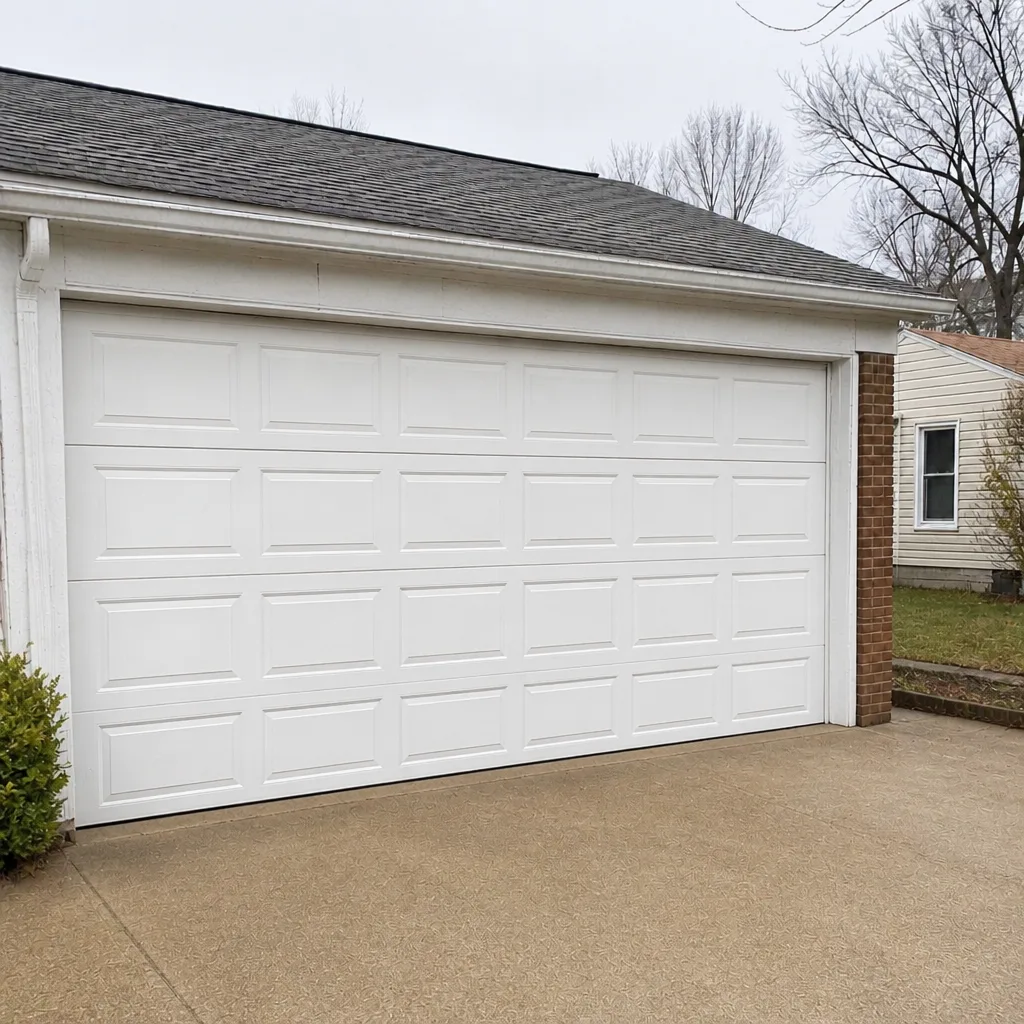
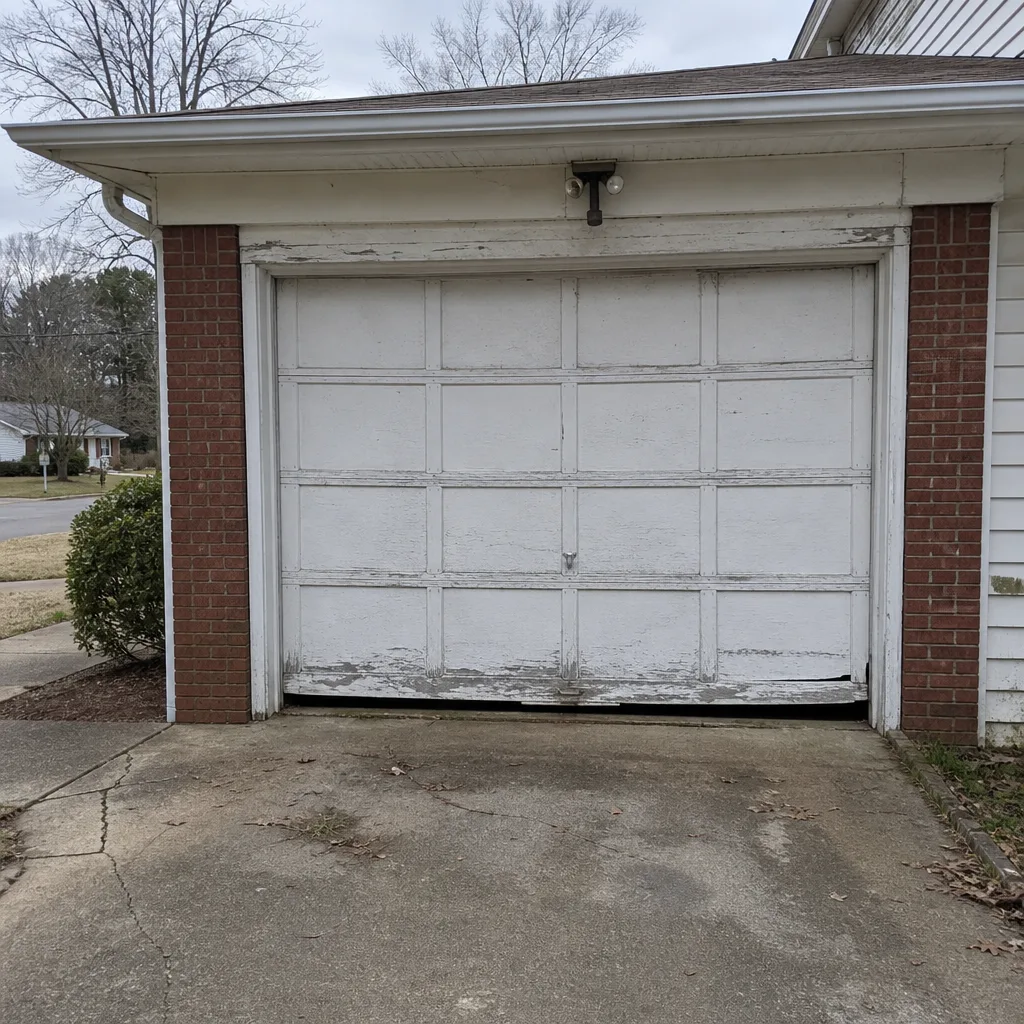
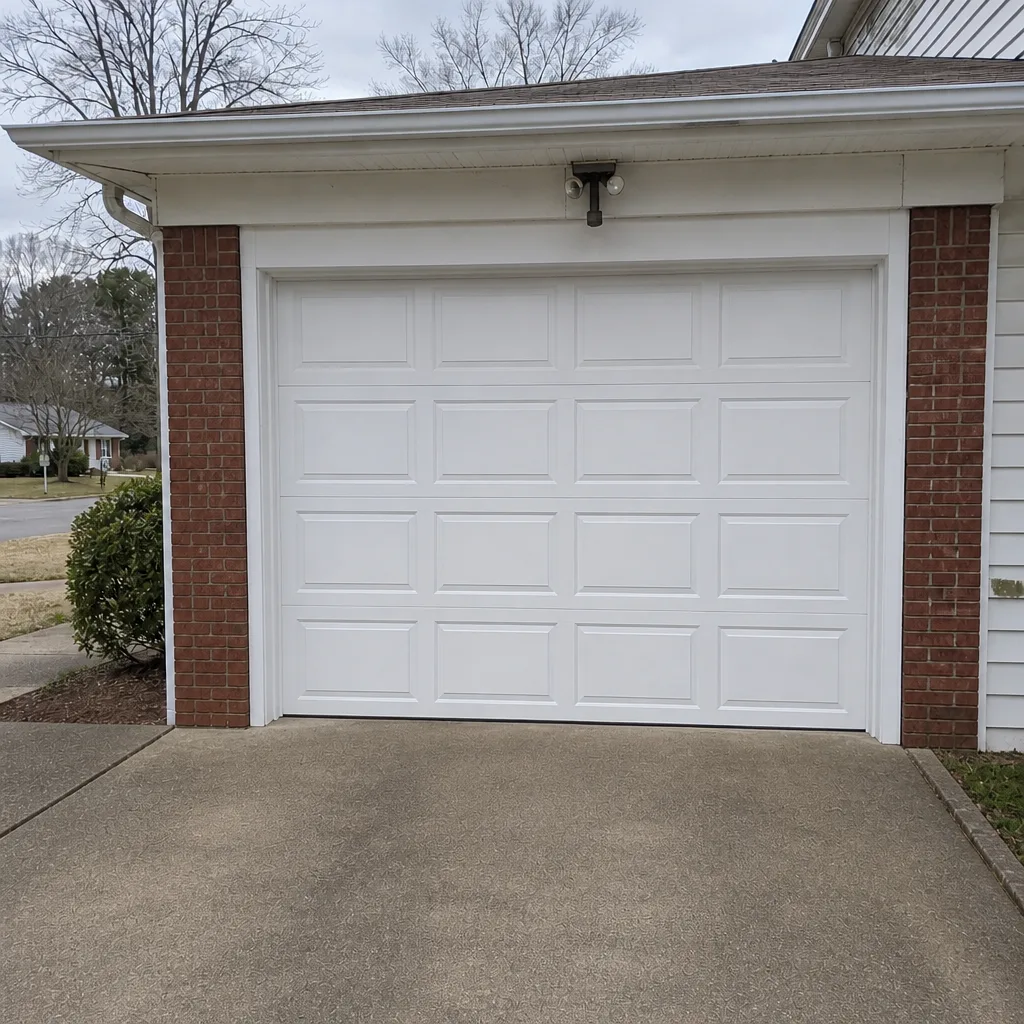
See the difference
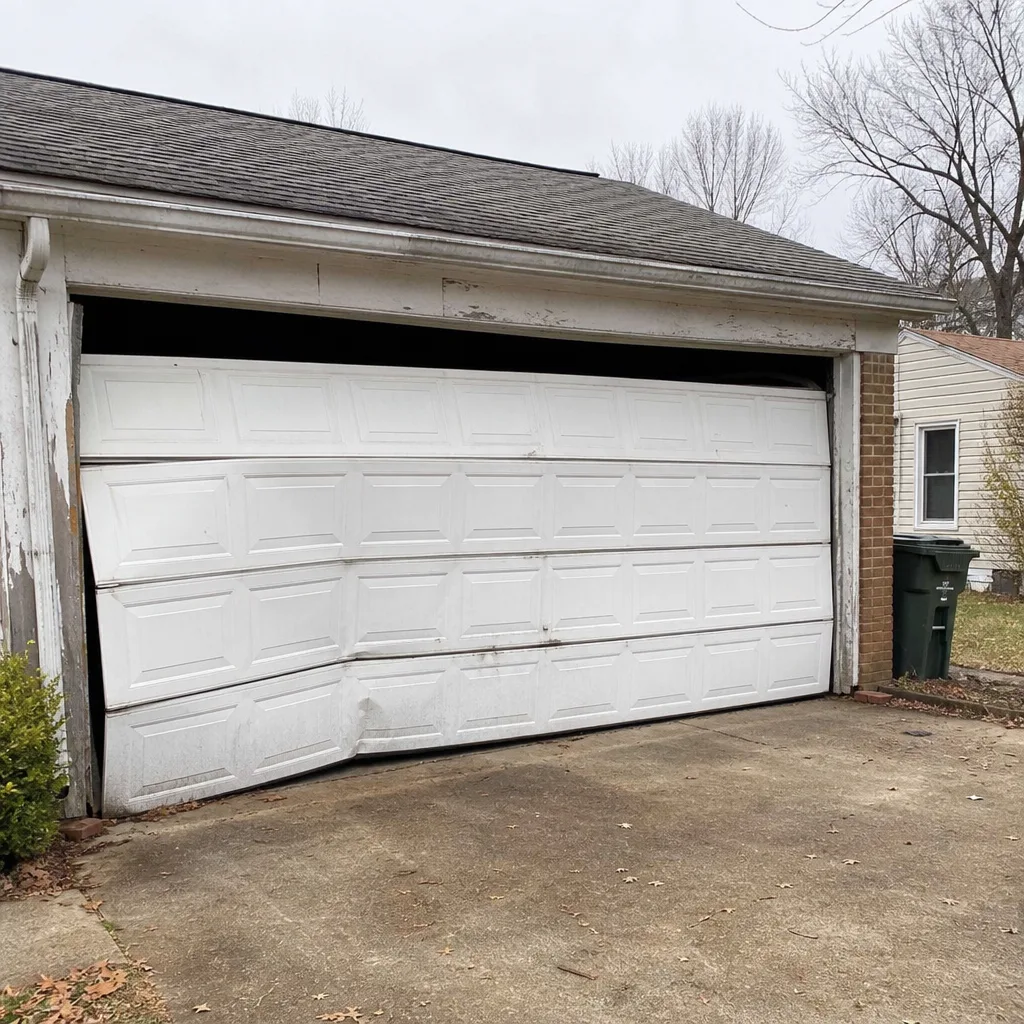 Before
 After
 Before
 After
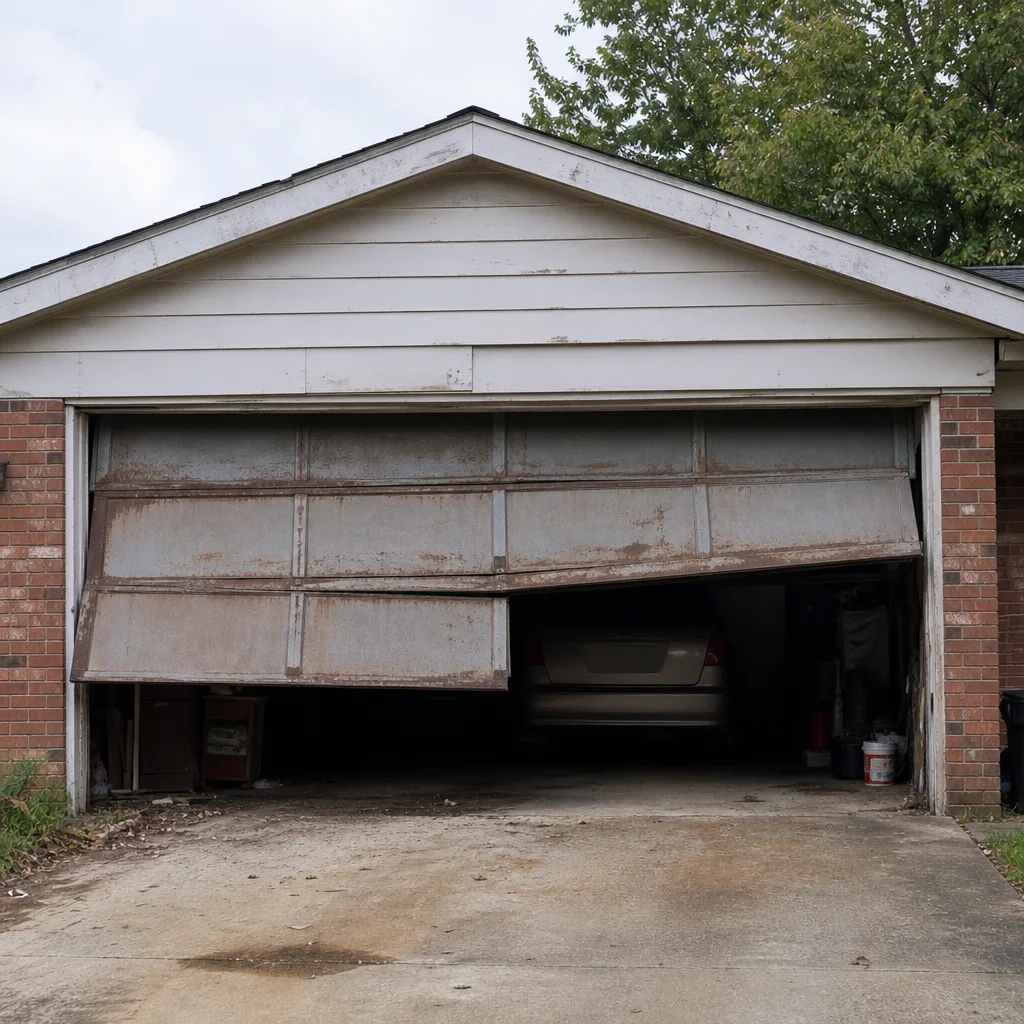 Before
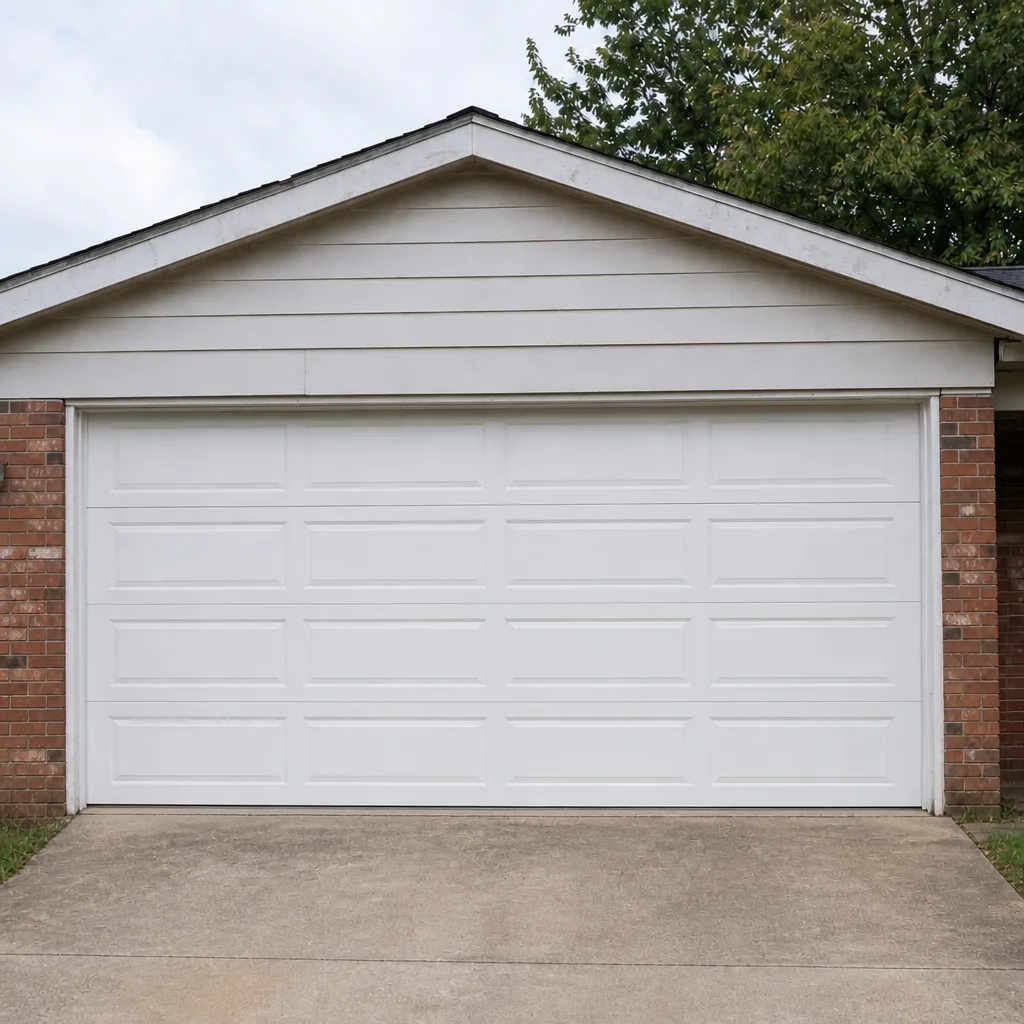 After
Frequently Asked Questions
No. Virginia does not issue a specialty garage door contractor license. The business should hold a Class A, B, or C contractor license through the Virginia DPOR, but the license is a business qualification and doesn’t certify individual skill on spring work. Verify the license through the DPOR database, then ask the five diagnostic questions in this guide to assess the technician’s actual experience, including for garage door opener repair. Call (855) 774-2730 for a free estimate.
Spring replacement is priced per job by written estimate, and the exact price depends on the spring type (torsion or extension), the door weight, and the parts spec. Note that a spring price normally covers one spring; a matched pair replaced together is about twice that. Get the number in writing before work starts. Call (855) 774-2730 for an exact quote – estimates are free.
Emergency service is available for situations where a non-functioning door traps a car or leaves the home unsecured. Same-day service is often possible for repairs. Call (855) 774-2730. We answer 24/7. Fast dispatch from 7am to 7pm, Sunday through Friday. A call outside dispatch hours is booked into the next opening, Sunday through Friday, 7am to 7pm.
It shouldn’t. The price is quoted and agreed before any work starts, and the written estimate sets the final price. If a contractor quotes verbally and then changes the number after disassembly, that’s the exact invoice surprise the written estimate exists to prevent. Call (855) 774-2730 for an exact quote – estimates are free.
A contractor working across multiple brands should be able to name specific manufacturers, not just say “everything.” Brands like LiftMaster, Wayne Dalton, and Raynor each have their own spring sizing and opener electronics, and a specialist’s familiarity with those differences means faster, more accurate diagnosis. Ask which brands your contractor works on regularly. Call (855) 774-2730 for a free estimate.
The local pro is licensed and insured as their state requires. Verify the license through the Virginia DPOR database before work starts, and ask for a certificate of insurance. This step applies to any contractor you hire in Richmond, not just us. Call (855) 774-2730 for a free estimate.
The Bottom Line
Hiring a garage door contractor in Richmond comes down to verification, five specific questions, and a written estimate you’ve actually read. The Virginia DPOR database filters out unregistered operators. The five questions filter out licensed-but-inexperienced generalists. The written estimate and warranty terms protect you from the invoice surprises that live in verbal agreements. A specialist who names brands, cites spring experience, and hands you a warranty with narrow exclusions is worth a premium over a cheaper quote with no paper trail. That’s the whole test. Apply it to any contractor you call, including Garage Door Repair Richmond Pros – and if the answers hold up, you’ve found your hire. Call (855) 774-2730 for a free estimate. We answer 24/7. Fast dispatch from 7am to 7pm, Sunday through Friday.
Written by the team at Garage Door Repair Richmond Pros.