
Last updated November 21, 2026
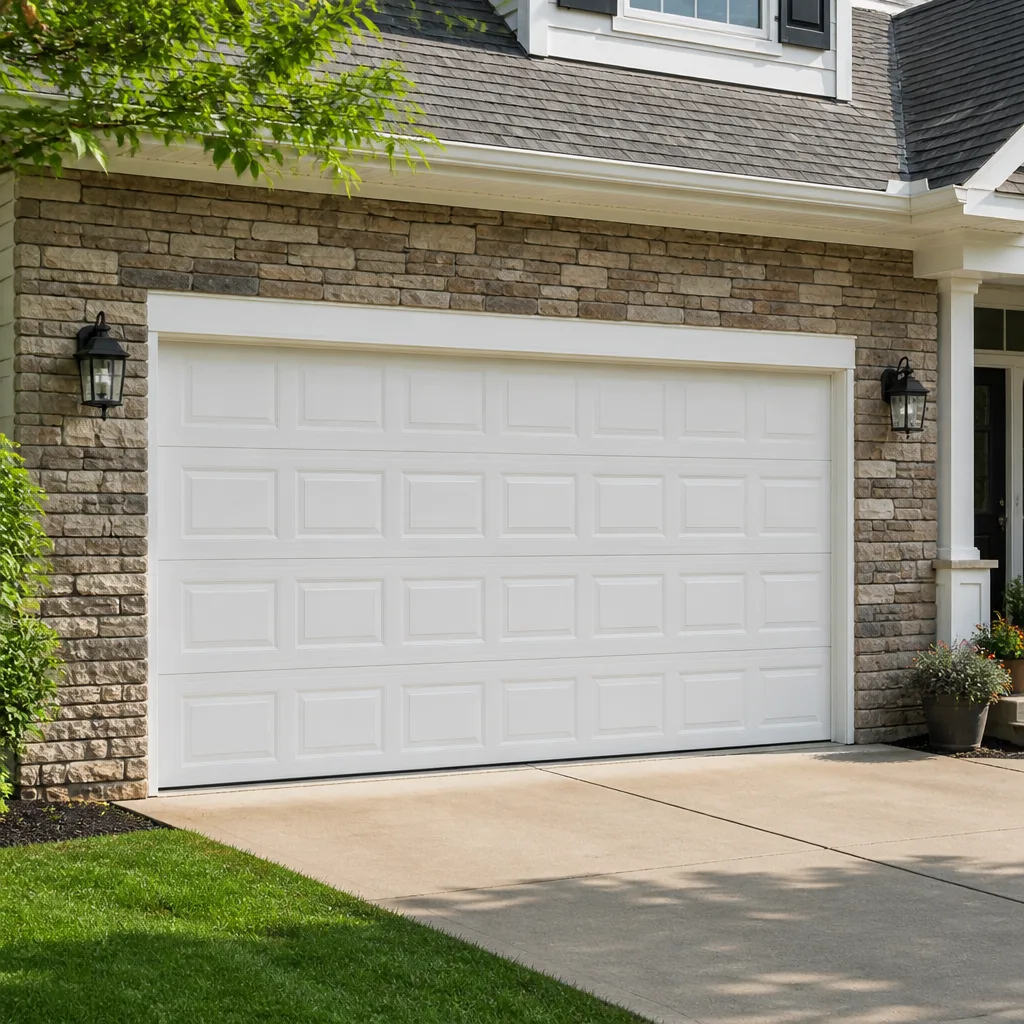 Raised-panel steel
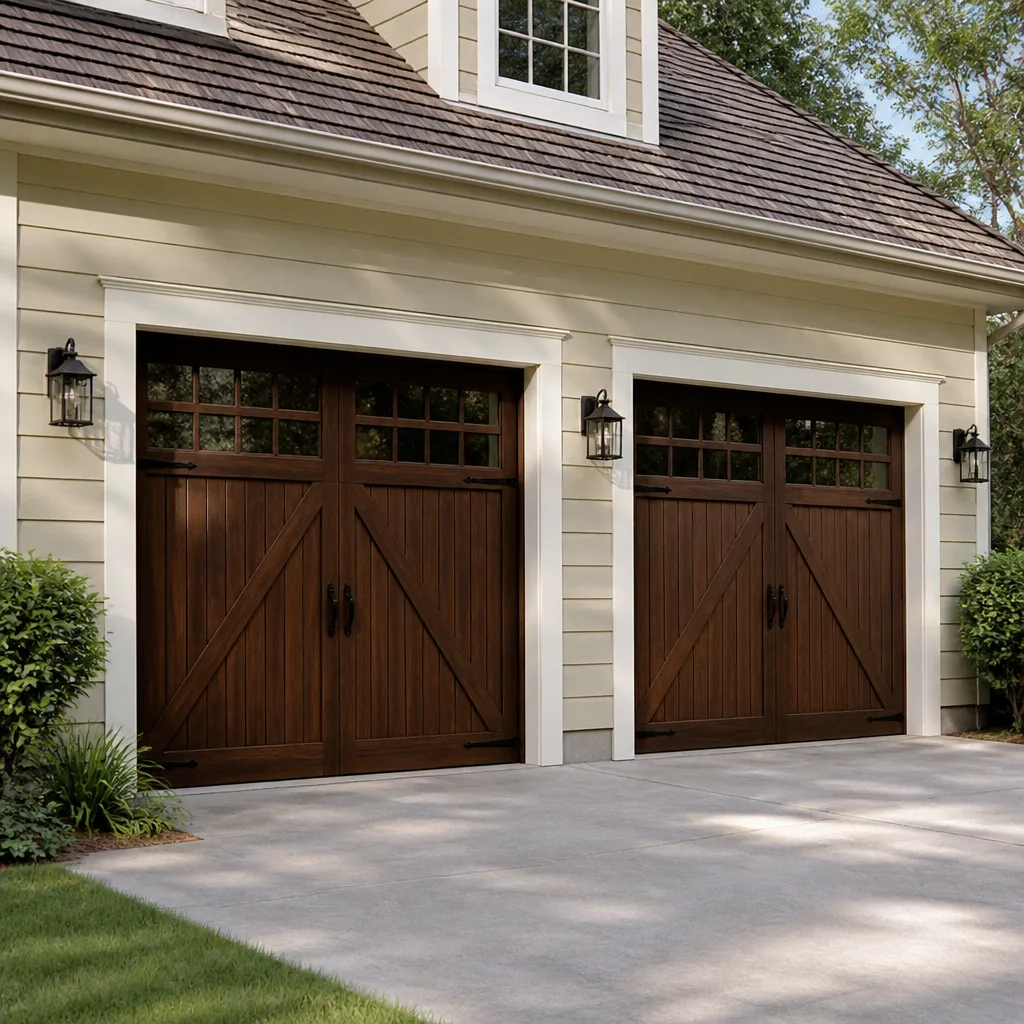 Carriage house
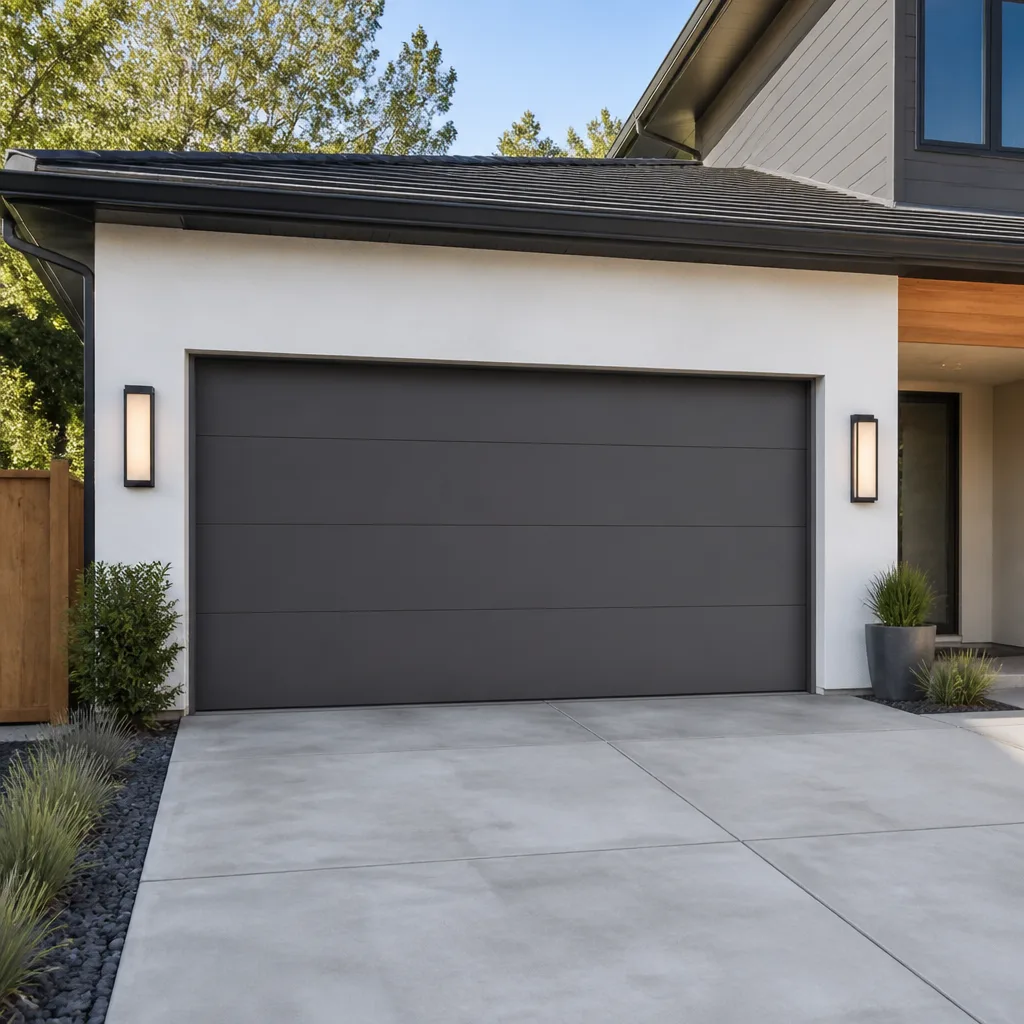 Modern flush
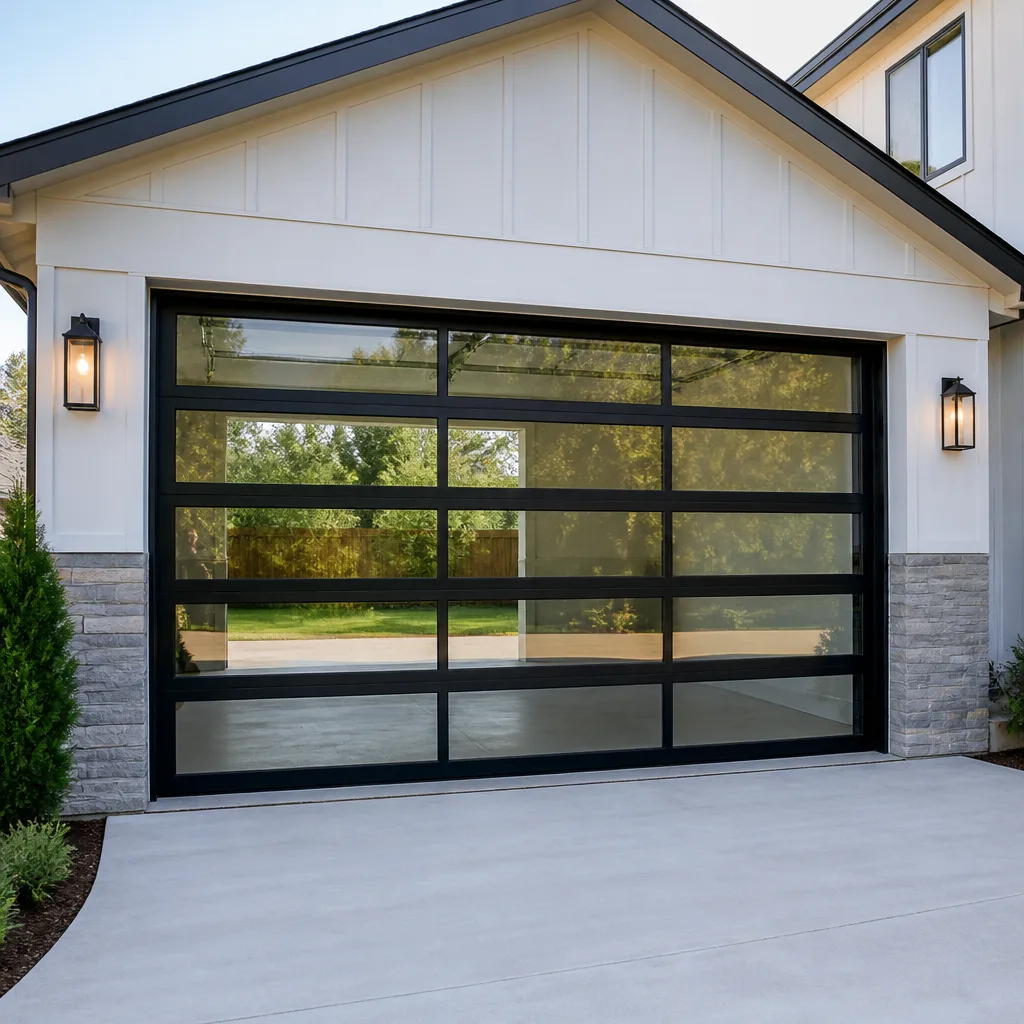 Full-view glass
 LiftMaster openers
 Chamberlain openers
Full 25-point door and opener safety check with every visit - springs, cables, rollers, tracks, and your LiftMaster or Chamberlain opener included
You get a price before we start. It does not change when the pro arrives.
Get your free estimateGarage Door Permits, Codes & Inspections in Richmond, VA: What You Need to Know
Most Richmond homeowners assume a garage door swap is permit-free, and often they’re right. But the exceptions are specific, consequential, and far more common in Richmond’s older neighborhoods than people expect. Replace a door in the wrong historic district without checking first, and you’re not just risking a fine. You can be required to remove and reinstall the entire door at your own expense. This guide walks through when Richmond City, Henrico, and Chesterfield actually require a permit, which neighborhoods trigger architectural review, how Virginia’s statewide building code applies to wind load and insulation, and what happens when unpermitted work surfaces during a home sale. You’ll also get the paperwork steps and the questions to ask any contractor.
Quick Answer
In Richmond, VA, a garage door permit is usually not required when you’re replacing a door of the same size in the same opening on a single-family home, but a permit is generally required when the work changes the structural opening, adds a new door where none existed, or alters the wall framing. Separately, exterior changes in Richmond’s architectural review districts need approval before any door goes up. When in doubt, call the city or county building department and ask directly. A phone call is cheaper than a removal order.
Key takeaways:
- A like-for-like door swap on an existing opening is typically permit-exempt for a single-family home.
- Structural changes to the opening, new openings, and wall alterations generally need a building permit.
- Richmond’s historic and architectural review districts can require approval for exterior door changes, even when no permit is needed.
- Virginia’s statewide building code sets wind-load and energy requirements that apply when work is permitted.
- Unpermitted door work can slow or derail a home sale inspection.
Styles & brands we work with
- Raised-panel steel
- Carriage house
- Modern flush
- Full-view glass
- LiftMaster openers
- Chamberlain openers
Table of Contents
- When does a garage door need a permit in Richmond?
- What counts as a structural change to a garage opening?
- Do Richmond historic districts require approval before a door is replaced?
- How does the Virginia USBC apply to door replacements here?
- What happens if unpermitted work turns up during a home sale?
- How do you submit a garage door permit application?
- What does a garage door inspection actually check?
- Common mistakes to avoid
When does a garage door need a permit in Richmond?
A garage door permit in Richmond, VA is typically required only when the work changes the structure of the opening or the wall around it. Straight replacement of a door and its tracks, springs, and opener in an existing opening on a single-family home is generally treated as ordinary repair and does not require a permit. The moment you cut, reframe, widen, or add an opening, you’ve crossed into work most jurisdictions want to review.
That distinction matters because so much of what people call “garage door work” is really two different jobs. Swapping a worn LiftMaster opener for a new one is repair. Converting a solid wall into a new garage bay is construction. Richmond, Henrico County, and Chesterfield County all treat these differently, and each has its own building department with its own forms and review timelines. The practical rule we give homeowners is simple: if the rough opening stays exactly the same size and location, you’re almost certainly in repair territory. If anything about the opening changes, pick up the phone.
Here’s a quick way to think about it:
- No permit usually: replacing a door of the same width and height, replacing springs and cables, replacing tracks, replacing or adding an opener, and routine hardware repairs.
- Permit usually required: widening or heightening the opening, moving the opening, adding a garage bay, changing the header or wall framing, or altering the structure to fit a different door type.
- Separate approval often required: exterior changes in a Richmond architectural review district, regardless of whether a building permit is needed.
None of this replaces a call to the authority having jurisdiction. Ask your city or county building department the question directly, describe the work in plain terms, and get the answer in writing if you can. If the answer surprises you, and it sometimes does in older neighborhoods, better to learn it before the door is ordered.
What counts as a structural change to a garage opening?
A structural change means you’re altering the framing that holds the door opening up, not just the door itself. In Richmond’s older neighborhoods, this line gets crossed more often than homeowners expect, because so many garages were built to a different size standard than today’s doors.
The clearest example is a door size change. If your existing opening is 8 feet wide and you want a 9-foot door, the framing has to move. The header above the door carries the load of the wall, and changing the opening size changes what that header has to do and can mean new framing on both sides. That’s a permit job in most of Virginia, and it’s the kind of work that needs a building inspector’s sign-off before drywall goes back up.
Other examples of structural changes:
- Adding a new garage bay. This is a wall alteration and a new opening at the same time, and it almost always needs a permit.
- Converting a carport or covered area into an enclosed garage. New walls, new header, new opening, permit.
- Raising the height of the opening to fit a taller door, often for a commercial-style or carriage-house look.
- Changing the wall to fit a different door type where the new door needs more headroom or a different track configuration.
- Removing a structural post or wall section near the garage opening to improve access.
We’ve seen plenty of homeowners in Richmond surprised at the cost difference between swapping a door in an existing opening and modifying an opening to fit the door they actually want. That’s a good reason to have a conversation about both options before you buy a door. A door that fits the opening is a repair. A door that requires the opening to change is a construction project with a permit attached. If you’re weighing those two paths, a proper measure by an experienced installer will tell you which one you’re really in.
Do Richmond historic districts require approval before a door is replaced?
Yes. Richmond has architectural review districts where any exterior change visible from the street or a public right-of-way needs approval before work begins, even if no building permit is required for the door itself. That’s the trap for homeowners in places like Church Hill, the Fan District, Jackson Ward, Shockoe Bottom, and Manchester.
The review is handled by the city’s architectural review board, and the purpose isn’t to be difficult. It’s to keep exterior changes consistent with the character of older neighborhoods. In a lot of these blocks, a garage door isn’t a background item. It faces an alley everyone drives past, or it’s the first thing you see from the street. Replacing a wood or carriage-style door with a modern steel sectional door can be denied even though the door itself is perfectly fine, and if it goes up without approval, the removal order comes out of your pocket.
Here’s the part most homeowners miss. The review is separate from the building permit. You can have a permit-exempt door replacement that still needs architectural review, and you can have an approved architectural review that still needs a building permit for a structural change. Two different checkpoints, two different offices, and both need to clear before the door is delivered.
What the review generally looks at:
- Style and material. Whether the door reads as period-appropriate for the block.
- Color and finish. Whether the finish matches the existing garage or the streetscape.
- Scale and proportion. Whether the door size and panel layout fit the building.
- Visibility. How much of the door is visible from the street or public way.
In our experience working across Richmond and its surrounding counties, the door brands that fit historical review best tend to be the ones builders were already using in these neighborhoods. Clopay and Raynor both make lines that pass architectural review more easily in the kind of homes you find in Church Hill or the Fan, because the panel profiles and glass options read as traditional rather than contemporary. If you’re in a review district, we can walk the door options with you before you commit, so the door you order is the one the review board is most likely to approve.
How does the Virginia USBC apply to door replacements here?
When a garage door replacement is permitted, the work has to meet the Virginia Uniform Statewide Building Code, which adopts national model codes with Virginia amendments. Two sections of that code come up most often for garage doors: wind load and thermal performance.
Wind load. Virginia’s code requires garage doors to be rated for the design wind pressure of the site, which is a function of historical wind speeds for the region. Most of Richmond and the surrounding counties fall in a moderate wind zone, which is a relief for homeowners compared to coastal Virginia, but a door still has to be rated for the wind pressure at its location. This matters because wind-rated doors are built differently from standard doors, and the difference is in the reinforcement of the panels, the track gauge, and the anchoring. If you’re replacing a door that was never wind-rated, the new one needs to be, and the contractor should be able to show you the manufacturer’s rating documentation.
Thermal performance. When a door separates a conditioned space from unconditioned or exterior space, the code references energy requirements for that assembly. In Richmond’s hot, humid summers and cold winters, an insulated door makes a difference to the temperature of anything directly above or beside the garage – a room, a hallway, a laundry. Insulated doors carry an R-value, and the door you choose needs to match what the code requires for the specific assembly. If your garage is fully detached and unconditioned, the requirement may not apply, and the building department can confirm.
What every permitted install should produce:
- Manufacturer’s wind-load documentation for the door model and size, showing the design pressure rating.
- R-value documentation for the door, if the assembly is conditioned.
- Fastener and anchoring specifications for the type of wall the door is being anchored to.
- Installation instructions from the manufacturer, followed as written.
The happy part is that this documentation usually comes with the door. The work is making sure the door you’ve ordered actually meets the requirement for your specific job, which is a conversation to have before ordering, not after. We work with Clopay and Amarr doors regularly and both publish the wind and R-value paperwork a building department wants to see. If your door is older and the paperwork is long gone, that’s fine, but it also means the new door needs its own documentation.
What happens if unpermitted work turns up during a home sale?
Unpermitted garage door work discovered during a home sale can slow or stall the closing. It doesn’t usually blow up a sale on its own, but it does create a paperwork problem the buyer’s lender and title company have to solve, and that problem has a timeline.
Here’s how it typically goes. The buyer’s inspector notices something that doesn’t look right on the door – an opening that’s been widened, a header that was cut, a new opening with no permit record, or a door that’s a different size than the original build. The buyer’s agent asks for proof the work was permitted. If there’s no record, the seller has to either get retroactive approval from the building department or negotiate a credit. Retroactive approval generally requires an inspection of work that’s already covered up, and if the inspector can’t see the structure, the fix can mean opening up drywall or reframing. That’s the expensive outcome, and it’s the one that costs the most when it goes wrong late.
The Richmond angle is that older neighborhoods have layers. A garage built in the 1950s and modified several times by several owners can have work from three different decades with three different standards, and the current owner often has no idea. In a home sale, “I didn’t know” doesn’t solve it. Documentation does.
What helps in a sale:
- Keep the permit record. If a permit was pulled for a structural change, keep the final inspection card and the closed permit with the home’s paperwork.
- Have a pre-listing inspection of the door if the door or opening looks newer than the house. Better to know before a buyer’s inspector tells you.
- Get a written assessment of whether an existing opening’s structure matches what was originally permitted.
If you’re buying a Richmond home with a newer-looking garage door, ask the seller for documentation on the opening. It’s a small question that saves a large headache later.
How do you submit a garage door permit application?
Submitting a garage door permit application in Richmond is a fairly short process once you know what documentation you’re gathering. The building department handles the review, the forms are published, and most straightforward structural work moves through without drama when the application is complete.
The general steps look like this:
- Confirm jurisdiction. Richmond City, Henrico, and Chesterfield each have their own building department. Start by working out which one reviews your address, then use that department’s online portal or counter.
- Confirm whether the work needs a permit at all. Describe the work in plain terms: like-for-like replacement versus structural change. Ask directly and note who you spoke to.
- Gather the documentation. That’s the manufacturer’s door spec sheet, wind-load rating, R-value (if applicable), and a drawing of the opening and how the door is anchored to the existing structure.
- Submit the application with the drawings. Most departments now accept electronic submittal. The application will ask for the scope of work, the door model, and how the new opening or framing is being built.
- Pay the permit fee and wait for review. Review timelines vary by workload and whether the application is complete.
- Do the work, then set up the final inspection. Don’t cover the framing until the inspection is signed off.
What a contractor should hand you when they’re handling the permit side:
- The permit number and the name of the record.
- The name of the licensed contractor on the permit, and their state license information.
- A copy of the drawings submitted and the door spec sheet.
- A written scope of work that matches what’s on the permit, so there’s no drift between the paperwork and the build.
If a contractor offering to do garage door installation in Richmond can’t tell you which permit applies or who’s pulled it, that’s a conversation worth having before work starts. We can walk through the documentation requirement with you and, where a structural change is involved, point you to the right department.
What does a garage door inspection actually check?
A garage door inspection, whether it’s a building inspection for permitted work or a home inspection during a sale, checks the safety, function, and attachment of the door system. It’s not a cosmetic review. The inspector wants to know that the door opens and closes safely, that the hardware is rated for the assembly, and that the anchoring is sound.
What inspectors and qualified technicians look at:
- Spring system. Whether the torsion or extension springs are matched to the weight of the door, and whether they show signs of wear. Inspectors look for mismatched or undersized springs that place stress on the door and opener.
- Cables and drums. Whether the lift cables are intact, correctly spooled on the drums, and firmly attached.
- Track alignment and condition. Track gauge, mounting bolts, and whether the track is straight and secure.
- Hinges and rollers. Whether the hinge plates and roller assemblies are rated for the door’s weight.
- Anchoring and framing. Whether the door is bolted into solid framing, and whether the header and jambs look correctly sized and intact.
- Opener function and safety reverse. Whether the opener reverses on contact and whether the safety sensors are working.
- Manual release. Whether the emergency release works without binding.
If a building inspector is reviewing a structural change, they’re also checking that the moved opening lines up with the framing plan that was submitted. That’s why the spec sheet matters: the inspector verifies the installed door against the door that was approved.
One safety note here, and it’s important. Springs, cables, and drums are the highest-risk parts of the door system. A tensioned spring stores a lot of energy, and a cable under load can injure a person badly. This is not a DIY repair, and no one should be reaching for the spring winding bars on their own. The right call for any spring, cable, or opener problem is a trained professional who can check the door safely and get it back in working order. If you’ve got a door that won’t move, that’s a call for emergency garage door service rather than a weekend project.
Common Mistakes to Avoid
- Assuming “same size” without measuring. Older Richmond homes have openings that don’t match today’s standard door sizes. Measure the rough opening before you order anything, because a door that’s off by a couple of inches turns a repair into a permit job.
- Skipping architectural review in a historic district. Church Hill, the Fan, Jackson Ward, and other review districts require approval for exterior changes visible from the street. If you skip it, the removal order lands on you, not the door company.
- Treating a structural change as a repair. Widening an opening, adding a bay, or moving a header requires a permit in most of Virginia. A contractor who waves it off as “no big deal” is someone to slow down with.
- Losing the permit paperwork. When the home sells in five years and an inspector asks about the newer-looking header, the permit record is what closes the conversation. Keep the plans section with the home’s documentation.
- Assuming the door is wind-rated because it’s new. The code requires wind-load ratings for the door at its location, and not every door is rated. Ask for the manufacturer’s documentation before the door is ordered.
- Reaching for the springs. Spring replacement is dangerous and, in our experience, the most common injury cause on garage door repairs. Leave that work to a trained technician.
- Ignoring an opener that’s out of sync with a new door. A new door with a mismatched opener can fail a safety reverse test at inspection, and the fix is a proper opener check, not a workaround.
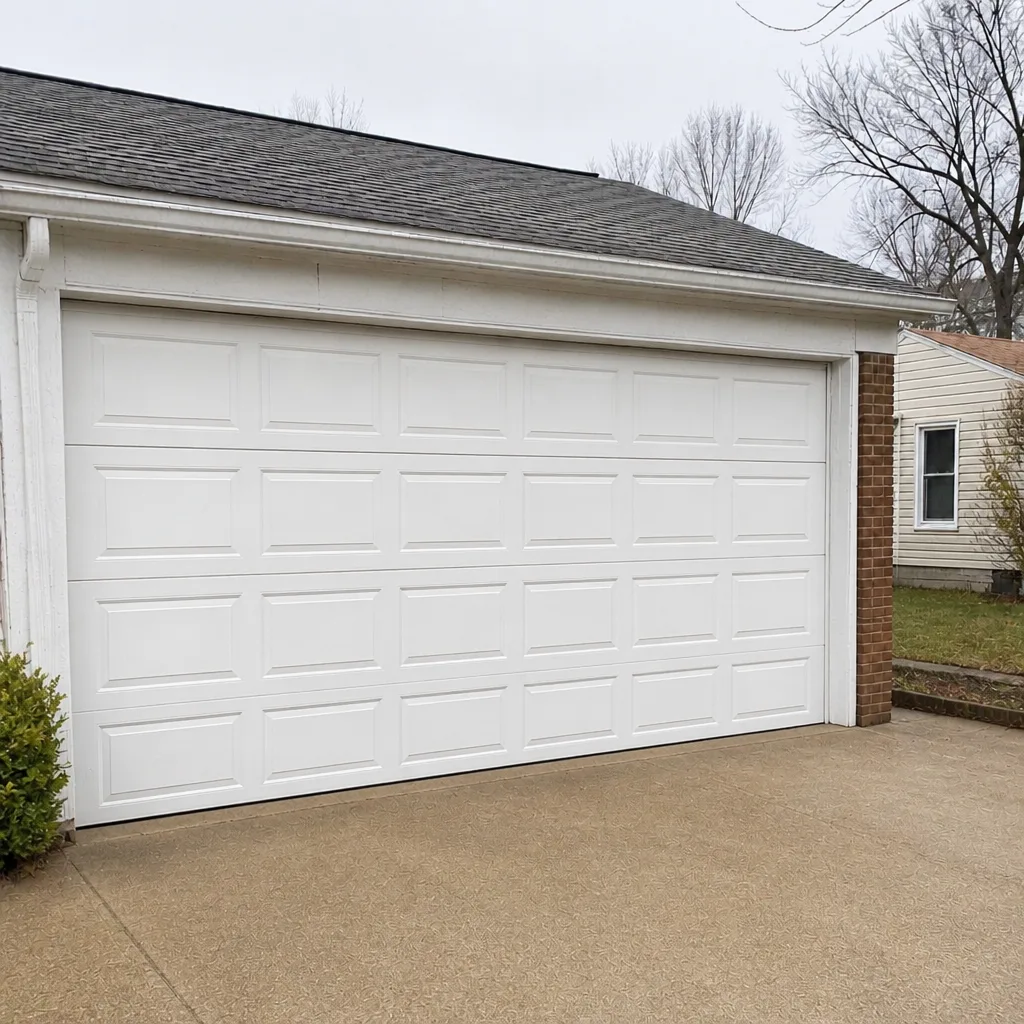
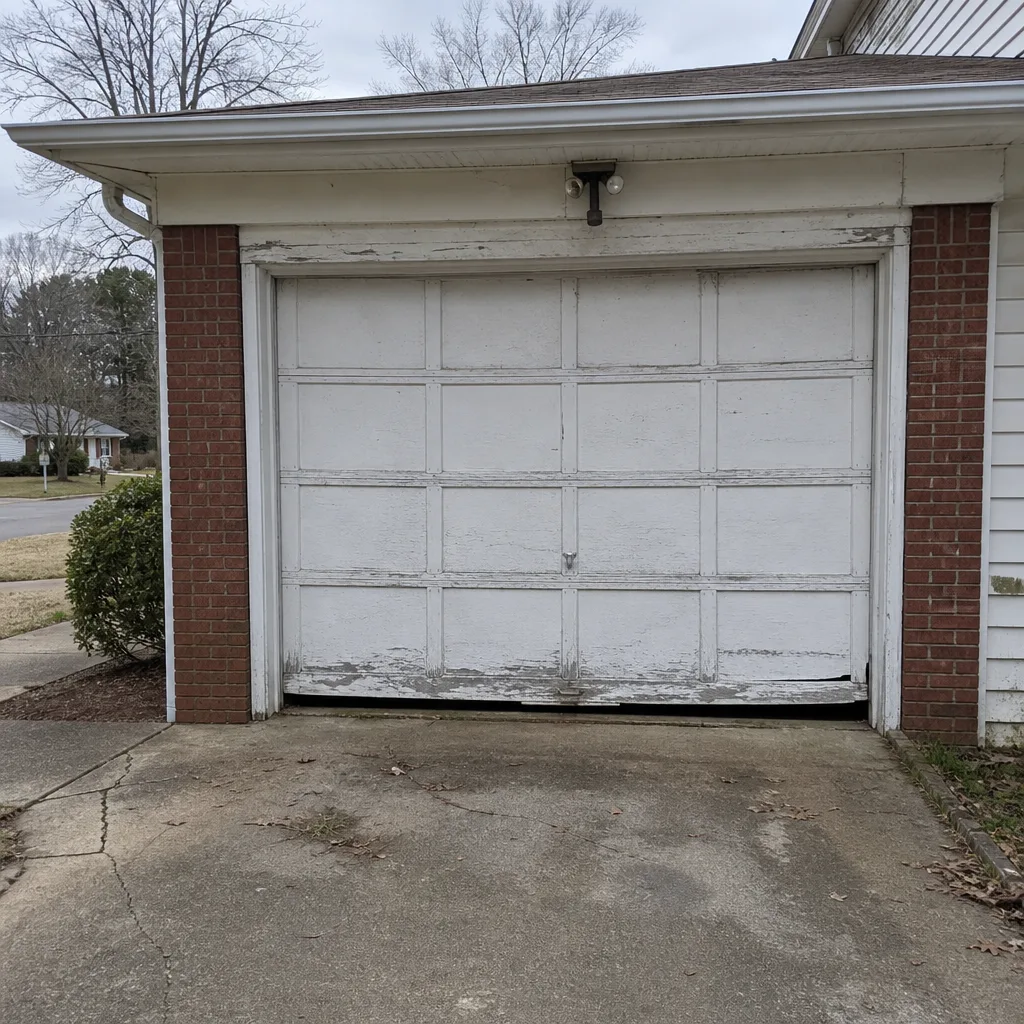
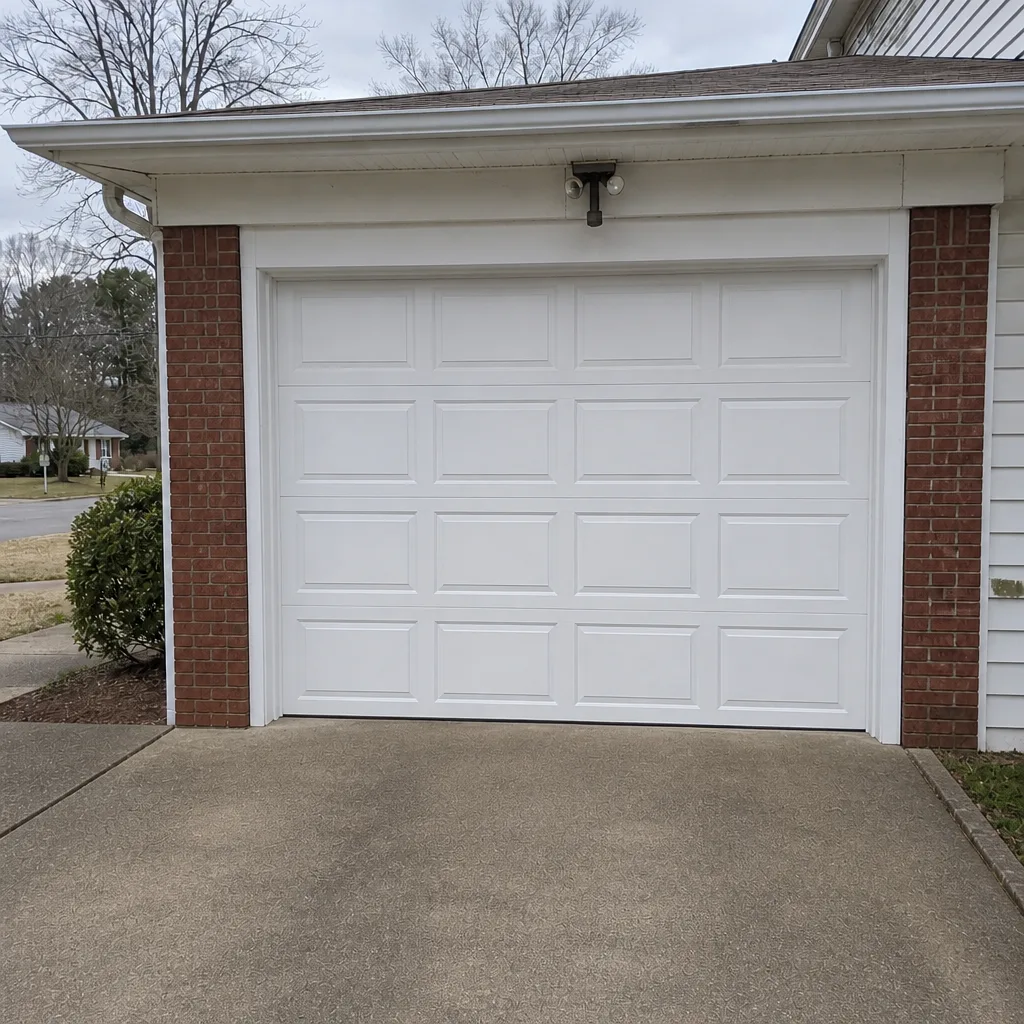
See the difference
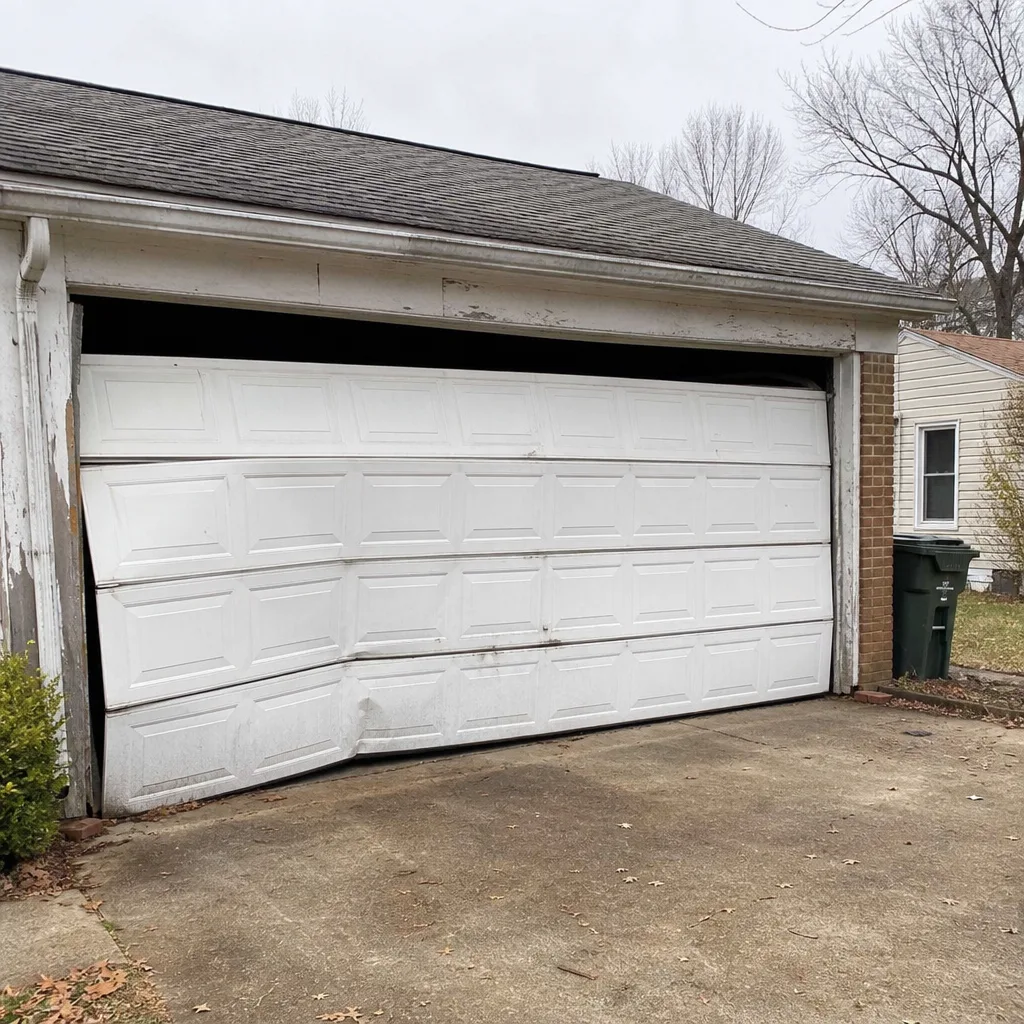 Before
 After
 Before
 After
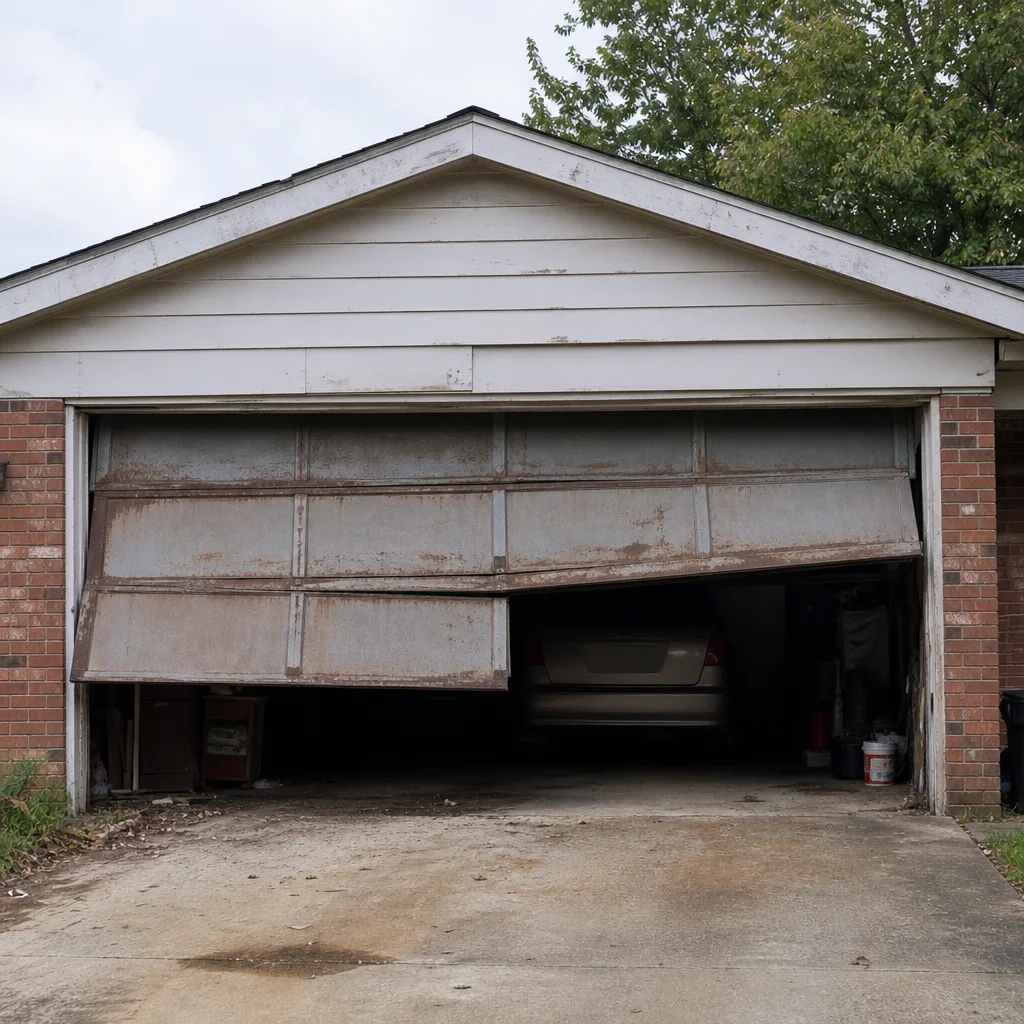 Before
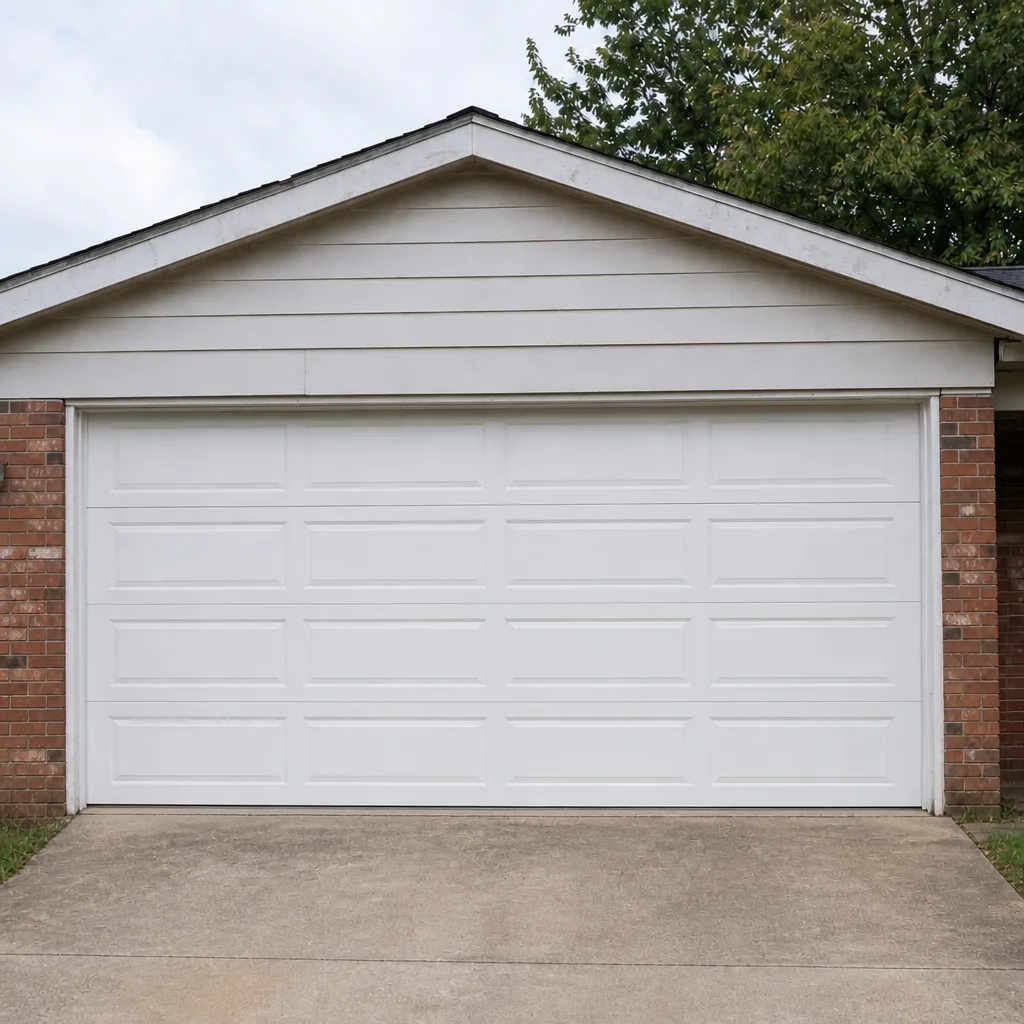 After
When to Call a Professional
Here are the situations where the call should go to a technician rather than a weekend project. Your door won’t open or close and the car is trapped inside. A spring has broken, and the door suddenly got very heavy or fell hard. A cable looks frayed or is hanging loose. The opener hums and nothing moves, or reverses itself halfway down. The door is visibly off its track, or one side is lower than the other. You’re planning a structural change and want to know what the permit path is before ordering a door. You’re in a historic review district and need to know which doors are likely to pass review. A sale is coming up and you want the door’s paperwork in order. We offer free estimates in Richmond, and a technician can tell you what’s repair and what’s permit before you commit to anything. Call (855) 774-2730. We answer 24/7. Fast dispatch from 7am to 7pm, Sunday through Friday. The estimate is free and the price is set per job by the written estimate, so nothing gets billed without a number you’ve already agreed to.
Frequently Asked Questions
Usually no, for a like-for-like replacement of a door and its hardware in the same opening on a single-family home. A permit is typically required when the opening is widened, heightened, moved, or newly added. Call the city or county building department and describe the work in plain terms to confirm, and if the address is in a Richmond architectural review district, check that approval separately because it’s a different office. Call (855) 774-2730 for an exact quote on the door side once you know the permit answer, and estimates are free.
Yes, if the garage separates conditioned living space from the outside. An insulated door carries a labeled R-value, and the code references energy requirements for the assembly in a permitted replacement. If your garage is fully detached and unconditioned, the requirement may not apply. The building department can confirm for your specific assembly, and the door spec sheet will show the rating. Call (855) 774-2730 for an exact quote on an insulated door for your opening, and estimates are free.
No. Garage Door Repair Richmond Pros connects you with independent local professionals who perform the work, and the permit is pulled by the licensed contractor doing the install, in their own name. What we can do is walk you through what documentation the building department will want and help you understand what’s repair and what’s permit before you commit. Call (855) 774-2730 for an exact quote on the door work, and estimates are free.
Your address falls under Richmond City, Henrico County, or Chesterfield County, and each has its own building department with its own forms and review timeline. Check your property tax record or your locality’s GIS tool to confirm the jurisdiction before submitting anything. Getting this wrong just sends the application back to you. Call (855) 774-2730 if you’d like a second opinion on the scope before you file, and estimates are free.
The new door has to have its own documentation. When a permitted replacement is done, the inspector verifies the installed door against the door that was approved, and that means the manufacturer’s spec sheet, wind-load rating, and R-value paperwork for the new door are what matter. The old door’s missing paperwork doesn’t block the job. Call (855) 774-2730 for an exact quote on the replacement, and estimates are free.
The local pro who performs the work is licensed and insured as their state requires. We connect you with independent local professionals, and our technicians have up to 13 years of experience working across eight major brands, including LiftMaster, Chamberlain, Genie, and Craftsman. The price you’ll be quoted is agreed in writing before any work starts, so you’ll know what the job costs before tools come out. Call (855) 774-2730 for an exact quote, and estimates are free.
The Bottom Line
The short version for Richmond homeowners: like-for-like door replacement is usually permit-exempt, structural changes to the opening almost always aren’t, and Richmond’s architectural review districts need approval for exterior changes whether or not a permit is involved. When work is permitted, the door has to meet Virginia’s wind-load and thermal code requirements, and the paperwork that proves it needs to exist before the door is ordered. Unpermitted work shows up in a home sale inspection sooner or later, and the cleanest path through that is documentation from the start. If you’re weighing a repair against a replacement, get a proper measure and a written price before you decide. If the door won’t move at all, that’s emergency territory, and that call should go to a trained technician.
Wherever you land on the permit question, one call covers the repair, opener, spring, or install side. We work on your brand and get your door back in working order today when the job allows. Call (855) 774-2730 for a free estimate. We answer 24/7, and dispatch runs 7am to 7pm, Sunday through Friday. For the full range of what we handle, take a look at Garage Door Repair Richmond Pros, our garage door repair service, garage door opener repair, and garage door installation.
Written by the team at Garage Door Repair Richmond Pros.